Installing Redamp.io via GPO
Learn how to install Redamp.io using GPO (Group Policy Object) on all your Windows devices.
Prerequisites
- Windows Server 2019 or later
- Windows devices already joined to the domain
1. Generating credentials for GPO
-
Log in to Redamp.io as an administrator. (If you are a partner, click on a specific client to open their dashboard and continue to the next step)
-
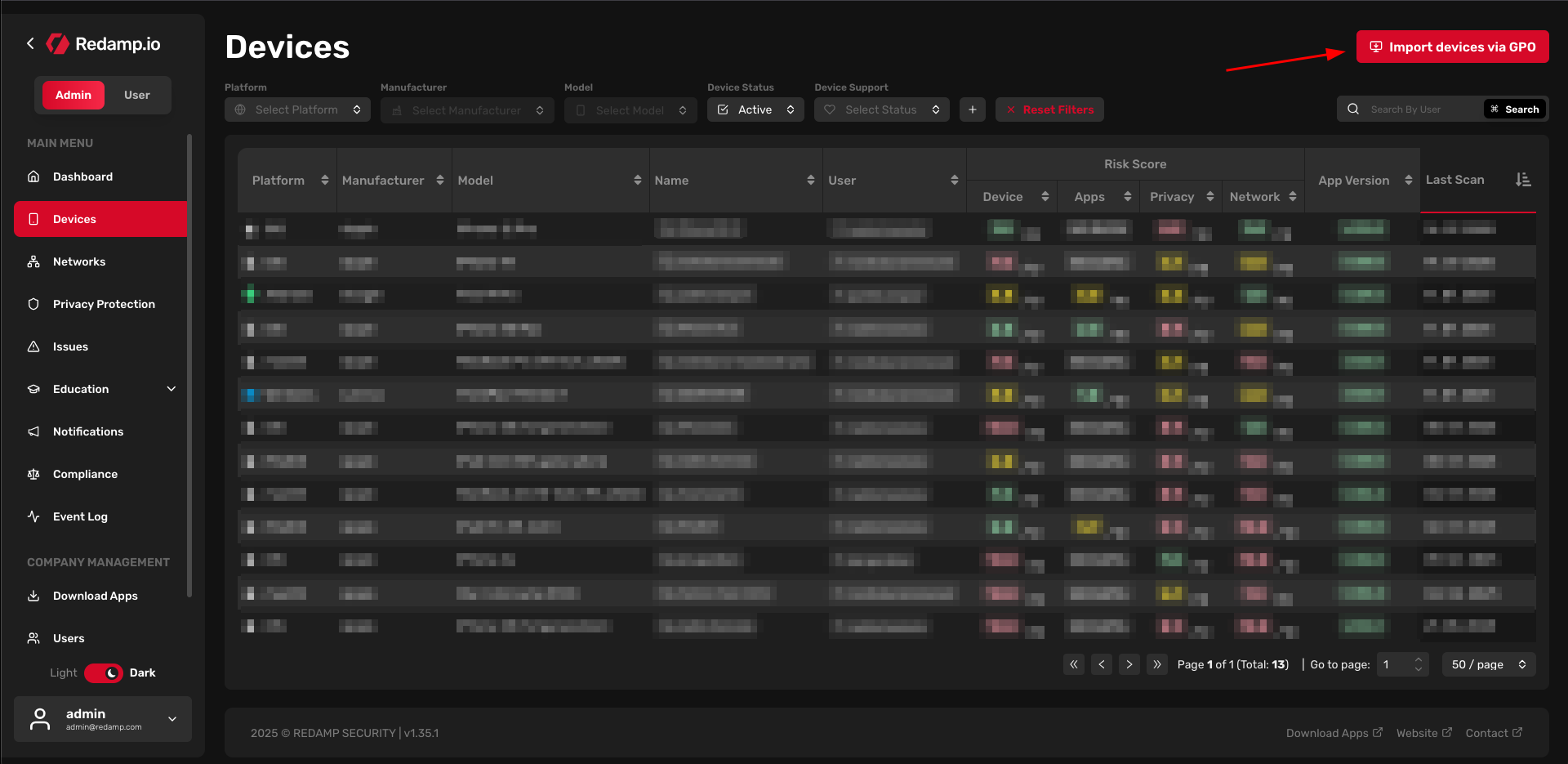
Navigate to
Devicesand click theImport via GPObutton in the top right corner.
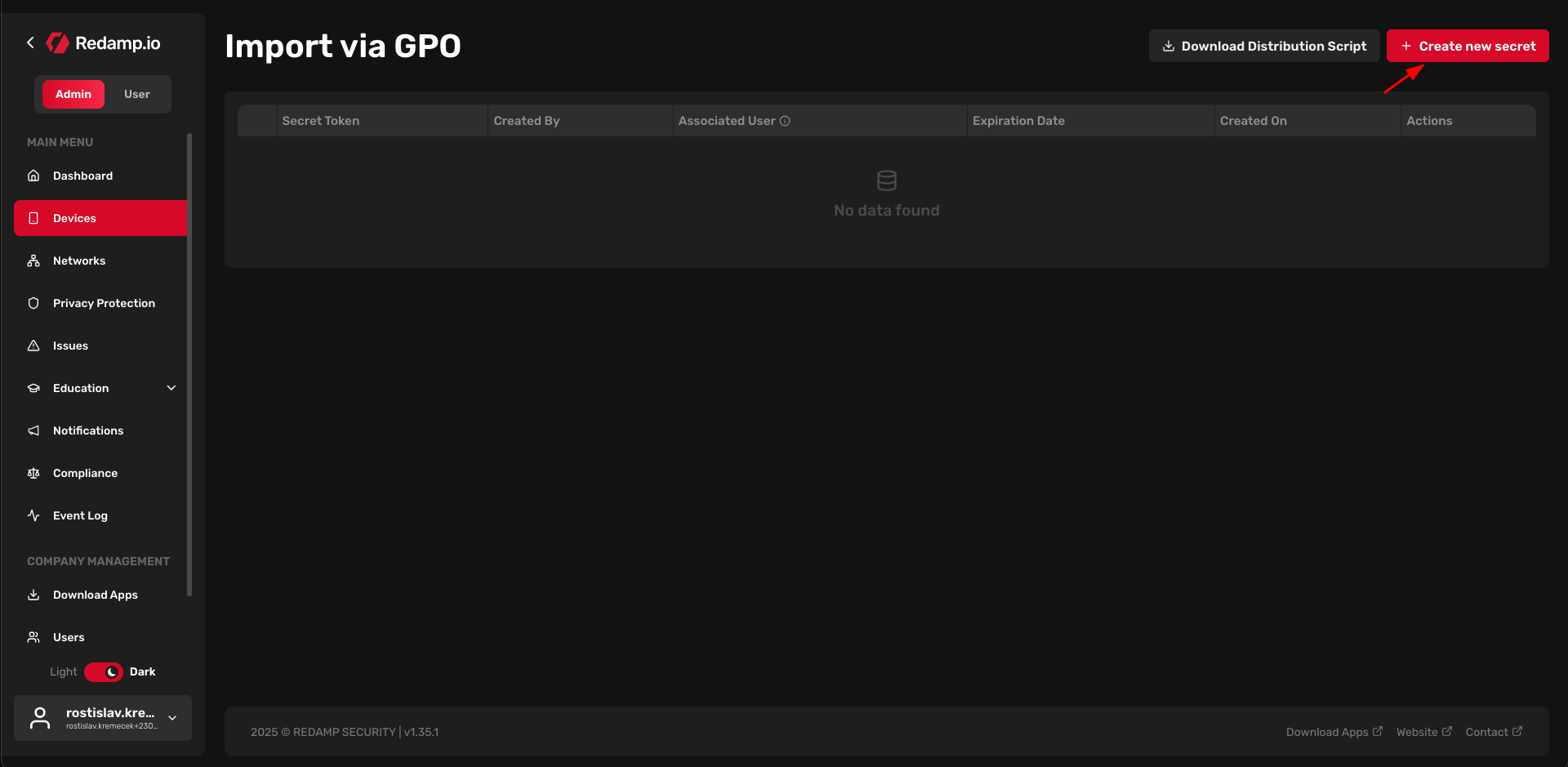
- Click the
Create new secretbutton in the top right corner.
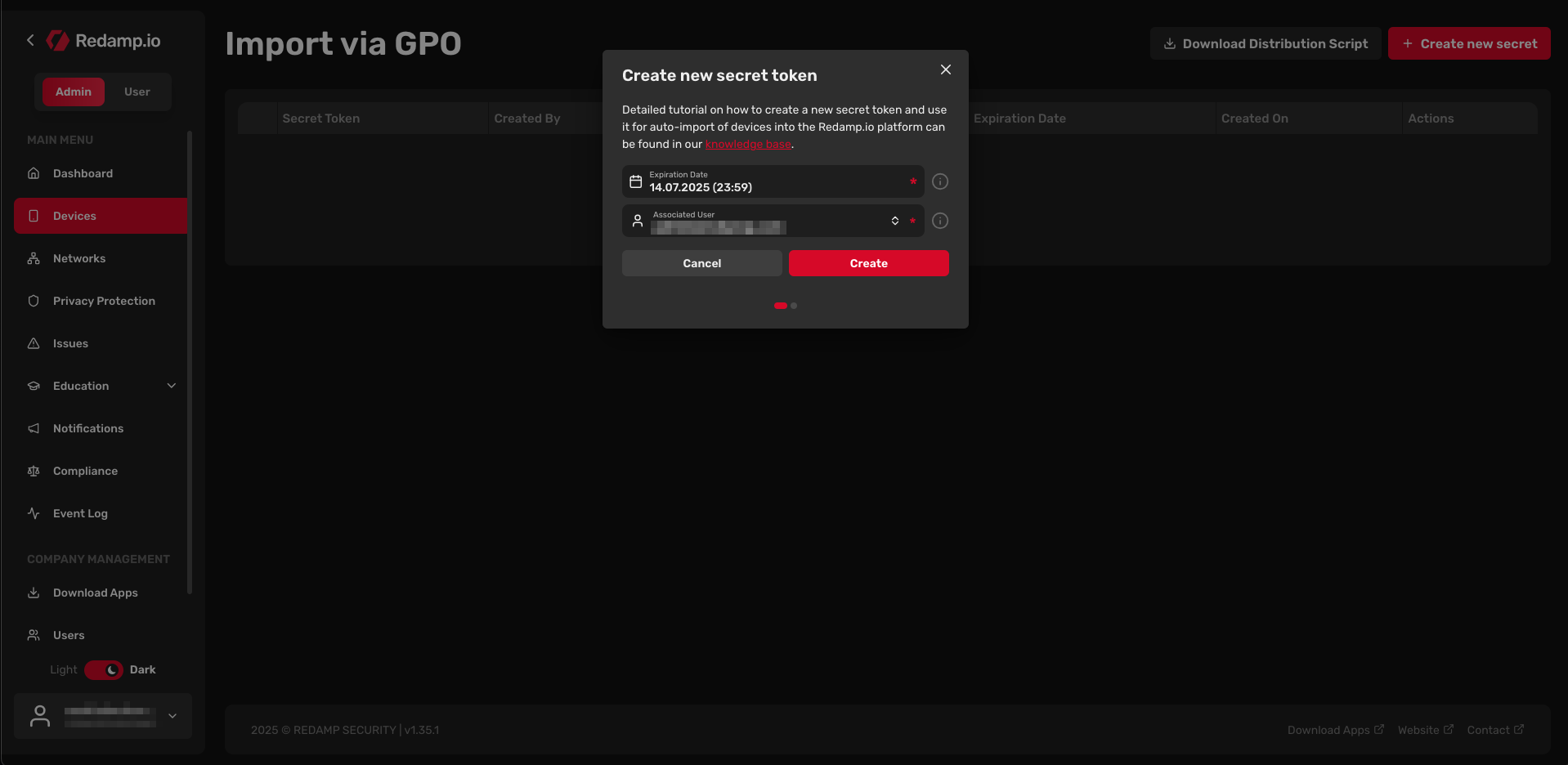
- Configure the following two key values:
Expiration date: Set the expiration date for the login token. After this date, the token becomes invalid.Associated user: Set the user under which devices will appear in the Redamp.io platform.
Then click the Create button to generate the secret.
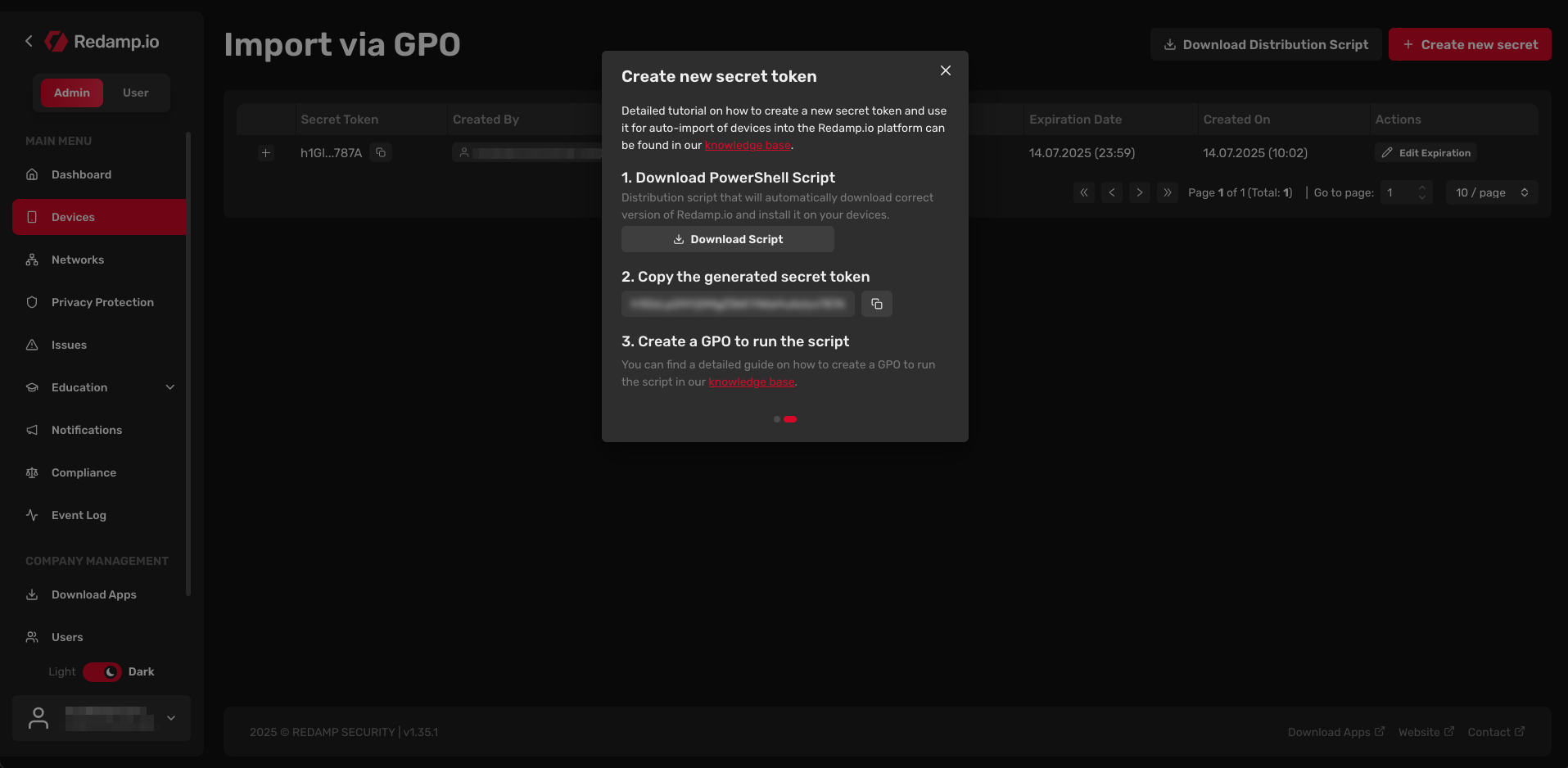
- Download the
RedampDistribution.ps1script by clicking theDownload scriptbutton and copy the generated token.
- Continue to the next step.
2. Storing the token on a protected share (recommended)
We recommend keeping the token in a file on a share that only domain computers can read. The token then stays out of the Group Policy configuration, and when you renew the token, you only replace the file. The GPO stays the same.
Who gets access and why
You give access to exactly two groups:
Domain Computers: all computers joined to your domain. The script runs on each device under the computer's own account, not under the signed-in user, so the devices must be able to read the token file. They only get read access.Domain Admins: your domain administrators. They get full control, so they can manage the folder and replace the token when you renew it.
Nobody else gets access. Regular users sign in with their own user accounts, which are not members of Domain Computers, so they cannot open the file, even on the same computers.
This step is optional. If you prefer a quicker setup, skip it and enter the token directly with the -Secret parameter in step 4.
Create the folder and the token file
-
On a file server, open
File Explorerand go to the drive where the folder should be, for exampleC:\. -
Turn on file extensions in
View->Show->File name extensions, so that the file is not saved astoken.txt.txt. -
Right-click an empty space, select
New->Folderand name itRedampToken. -
Open the folder, right-click and select
New->Text Document. Name ittoken.txt. -
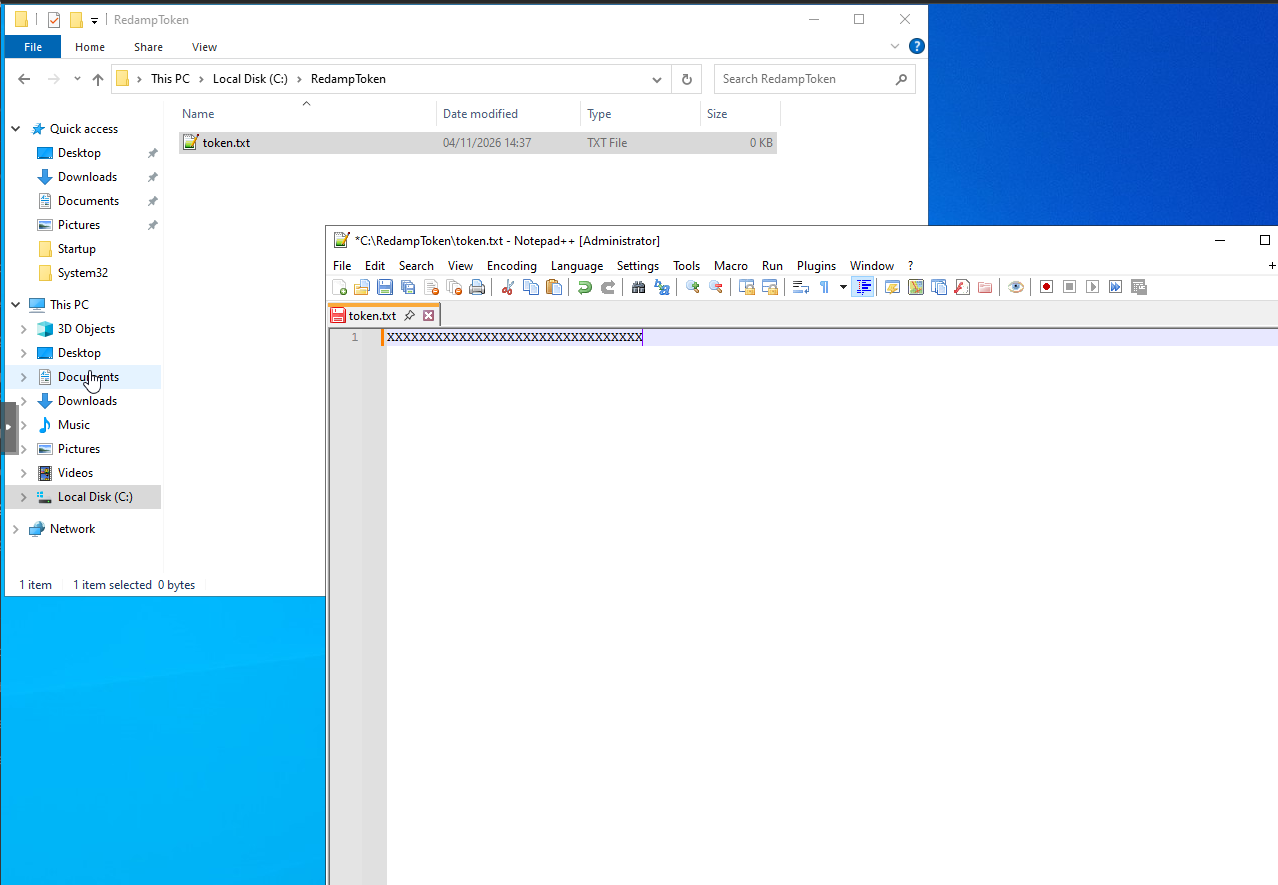
Open
token.txt, paste the token from step 1 and save the file. The file must contain only the token.
Set the folder permissions
-
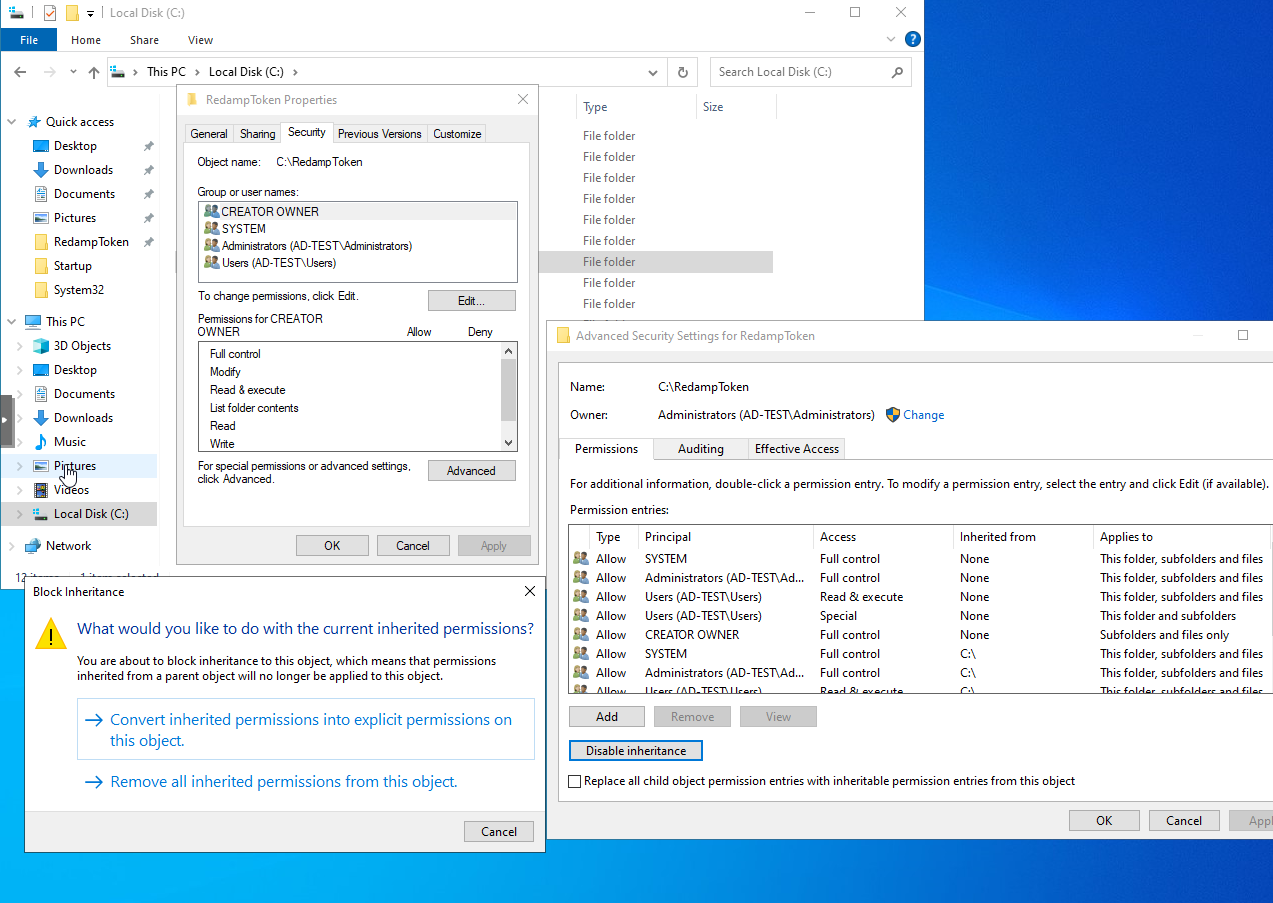
Right-click the
RedampTokenfolder and selectProperties->Security->Advanced. -
Click
Disable inheritanceand selectConvert inherited permissions into explicit permissions on this object.
-
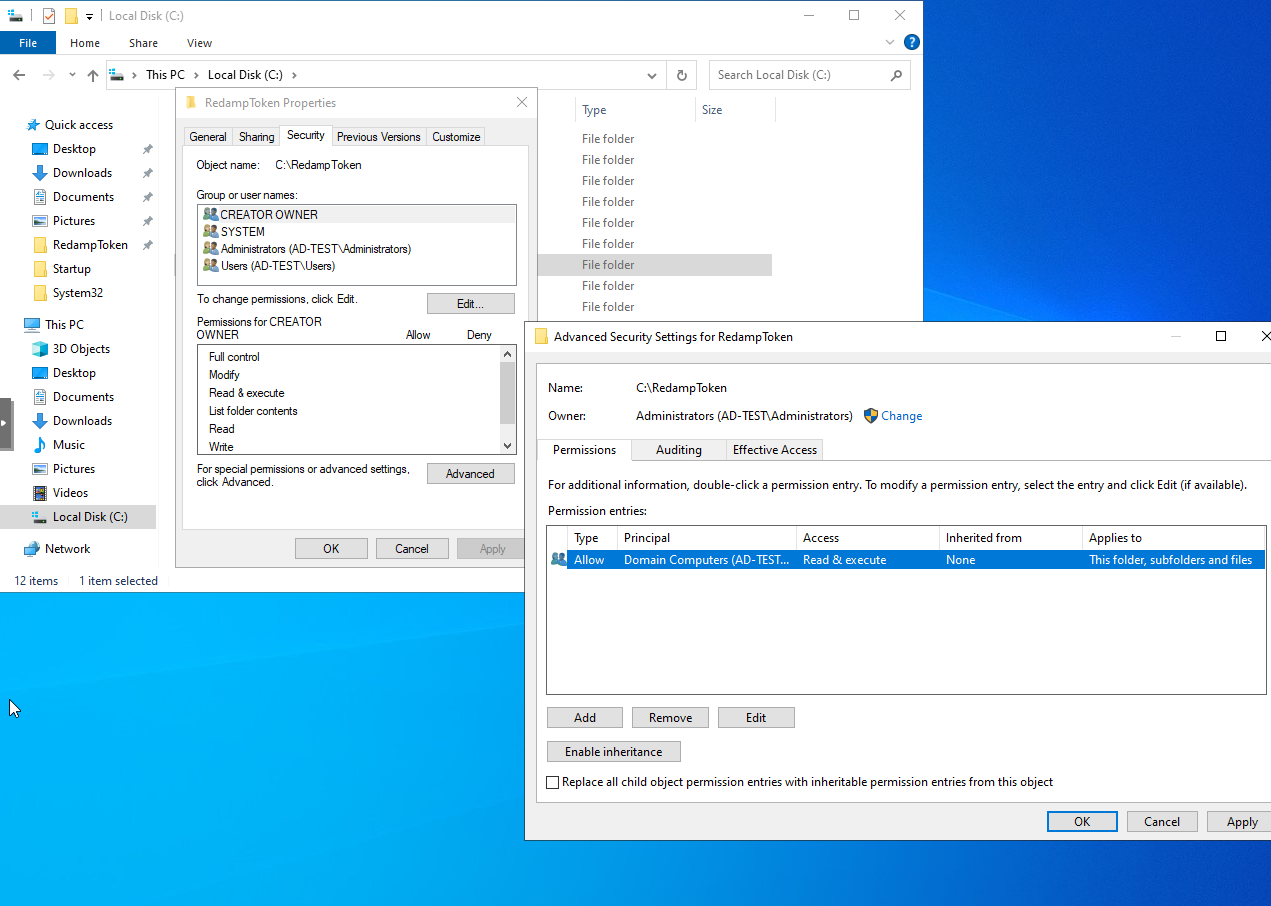
Select every entry in the
Permission entrieslist and clickRemove, so that the list is empty. -
Click
Add->Select a principal, typeDomain Computers, clickCheck NamesandOK. Keep the basic permissionsRead & execute,List folder contentsandRead, setApplies totoThis folder, subfolders and filesand clickOK.
-
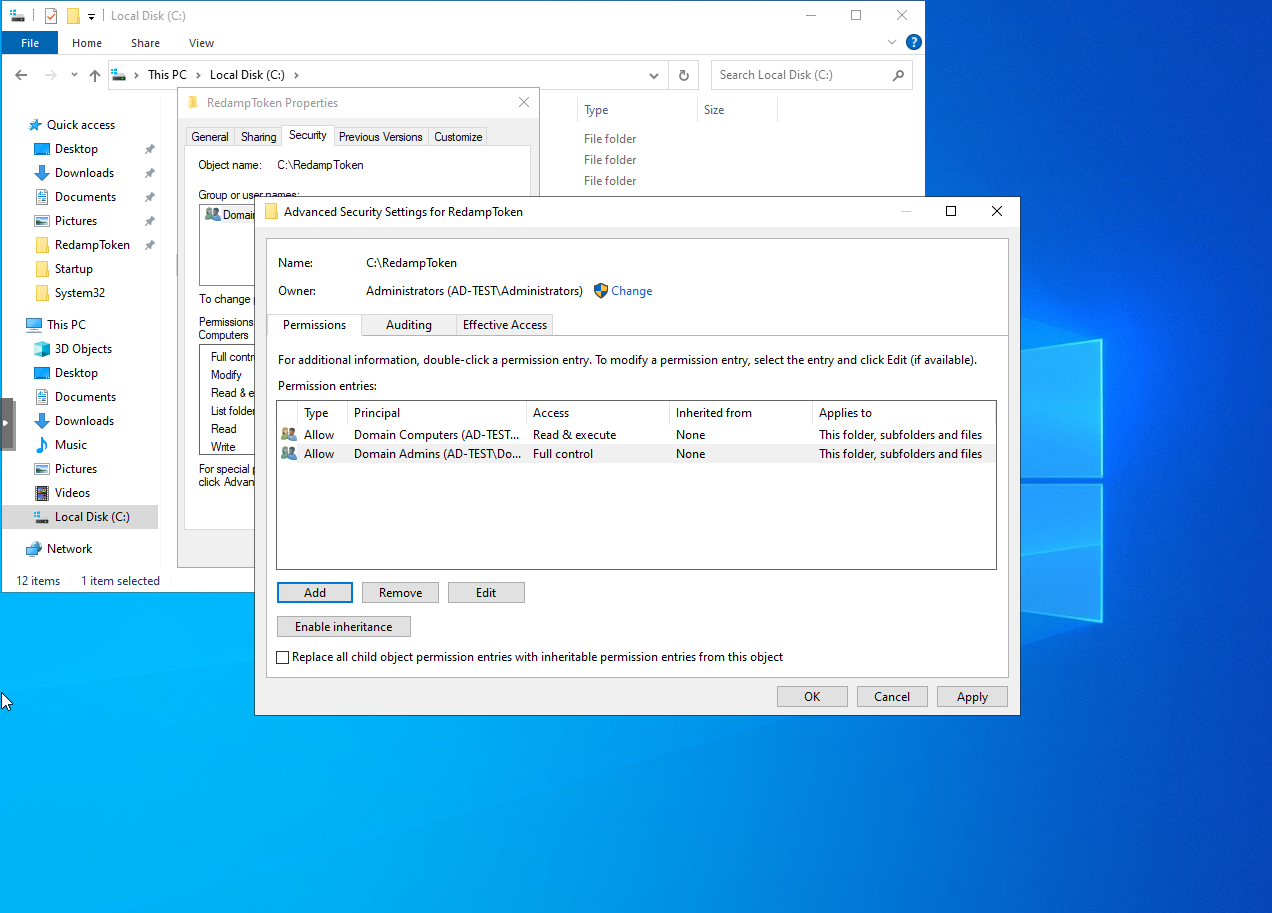
Click
Addagain and addDomain Adminsthe same way, this time withFull control. -
Check that the list contains only
Domain Computers(Read & execute) andDomain Admins(Full control), then clickApplyandOK.
If the GPO also applies to domain controllers, add Domain Controllers with Read & execute as well. Domain controllers are not members of Domain Computers.
Share the folder
-
Right-click the
RedampTokenfolder and selectProperties->Sharing->Advanced Sharing.... -
Select
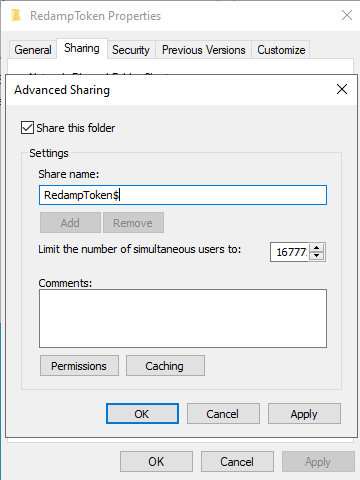
Share this folderand enterRedampToken$as theShare name. The$at the end hides the share from network browsing.
-
Click
Permissions, selectEveryoneand clickRemove. -
Click
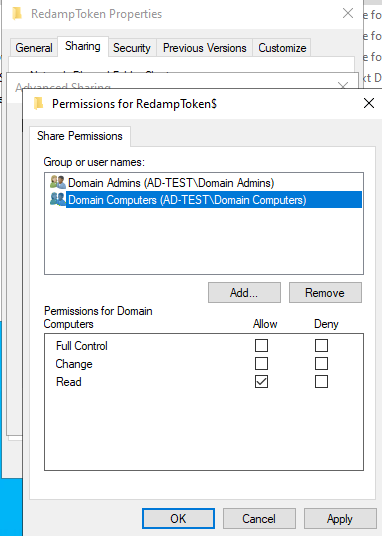
Add..., addDomain Computersand allow onlyRead.
- Click
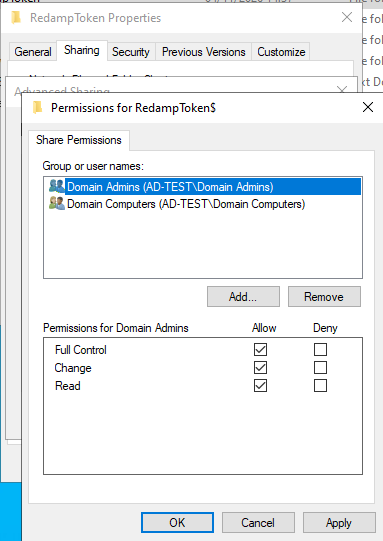
Add...again, addDomain Adminsand allowFull Control. If you addedDomain Controllersto the folder permissions, add it here withReadtoo.
- Click
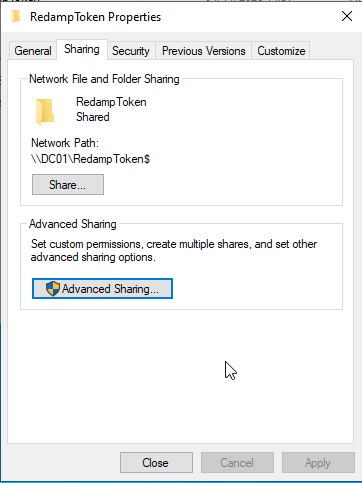
OKtwice. On theSharingtab, note theNetwork Path, for example\\DC01\RedampToken$. The full path to the token file is then\\DC01\RedampToken$\token.txt. You will need it in step 4.
- Click
Close.
Optional: verify the setup
If you want to make sure the token is protected, sign in to a domain device as a regular user and enter the full path to the token file in File Explorer. Windows should deny access. This is expected: the devices themselves can still read the file, because they use the computer account.
Continue to the next step.
3. Mapping devices to email via comment attribute
To make sure the Redamp.io application signs in on each device under the intended account after installation, you must set a valid email address from your AD domain in the comment attribute. If the email is not set in this attribute, the application signs in under the first logged-in user from the AD domain, and if that process fails, a default account is assigned.
- Open
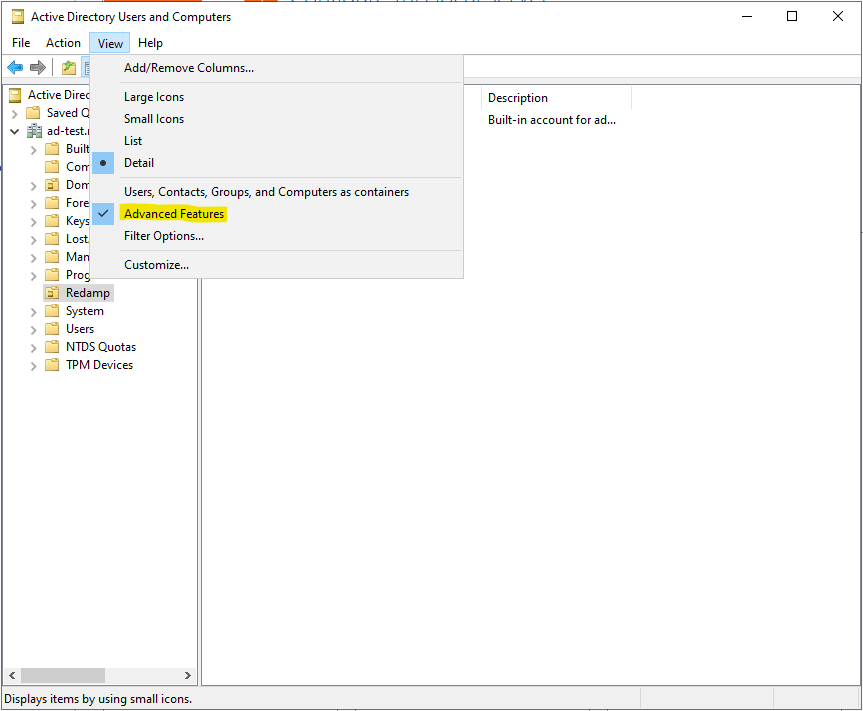
Active Directory Users and Computers, clickView, and enableAdvanced Features.
-
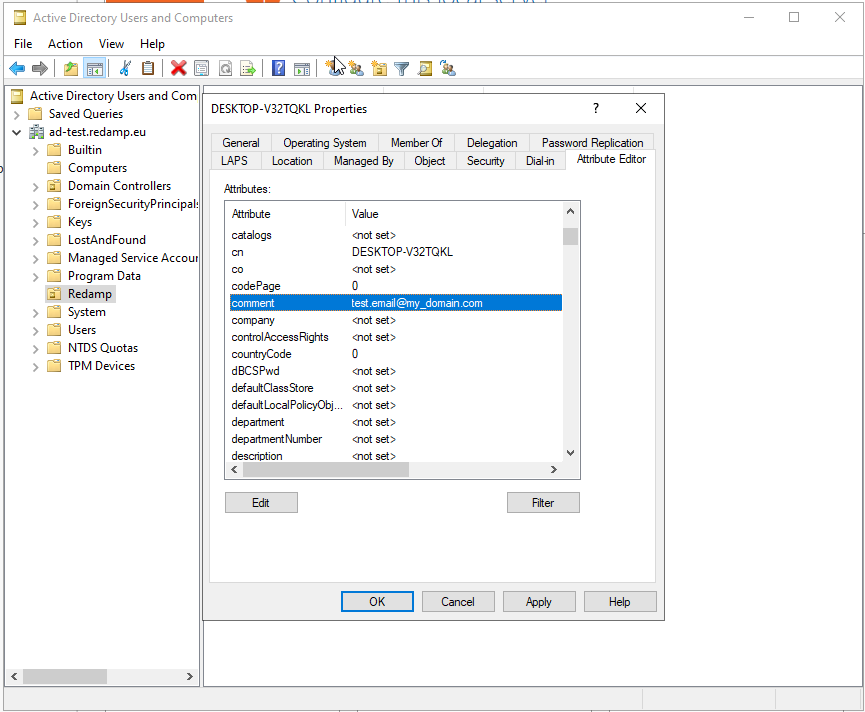
Open the target device account properties and go to the
Attribute Editortab. -
Find the
commentattribute and set the target email address (for example,test.email@my_domain.com). You can use any email address from your AD domain under which the devices should be signed in.
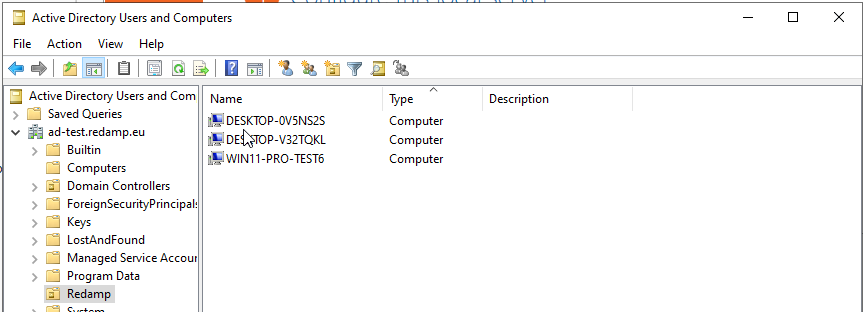
- Verify that all required devices are part of the selected AD group.
- Continue to the next step and configure the GPO deployment.
4. Installing Redamp.io via GPO
- Open the
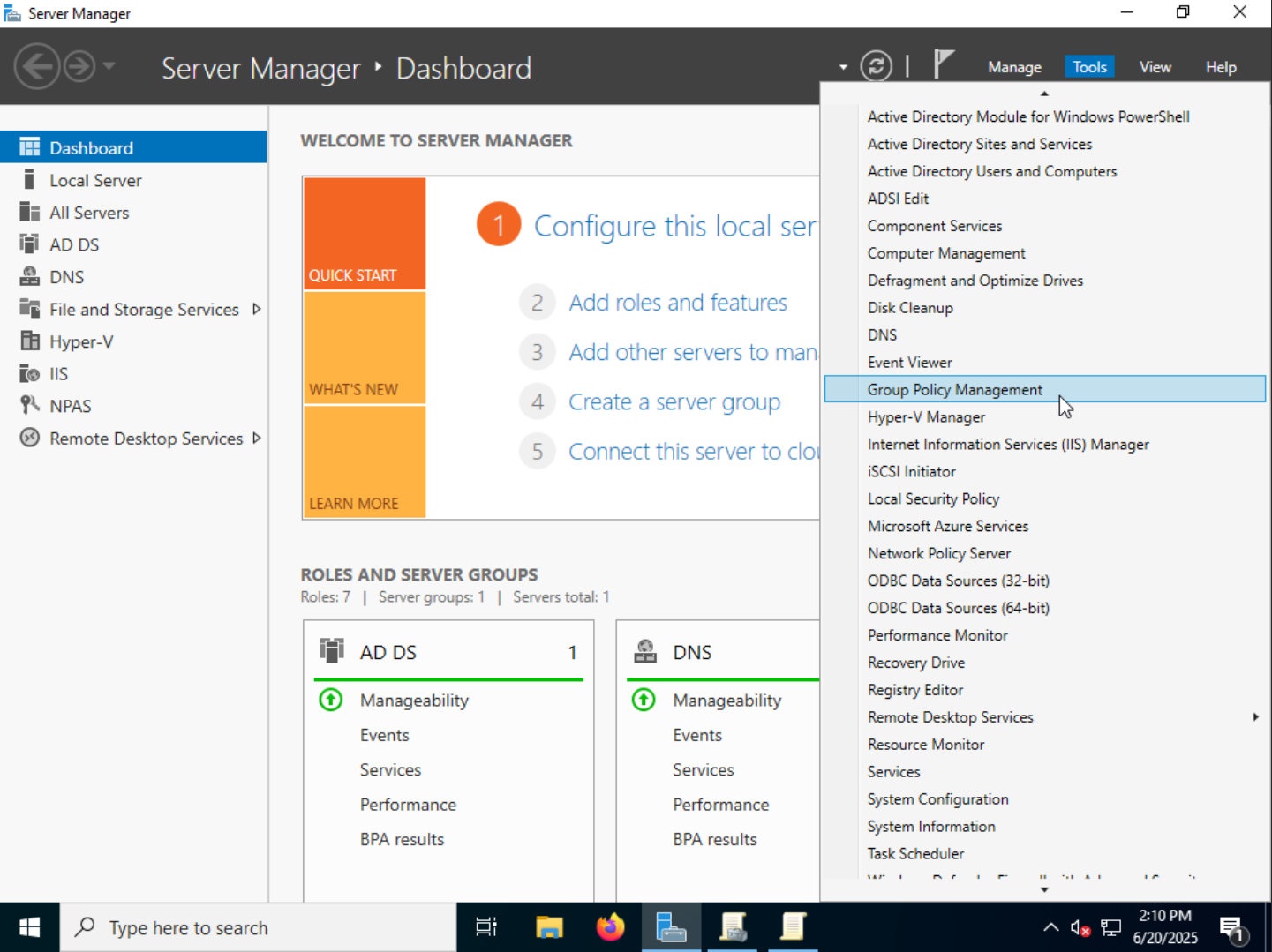
Group Policy Managementwindow using the search box or viaServer Manager->Tools->Group Policy Management.
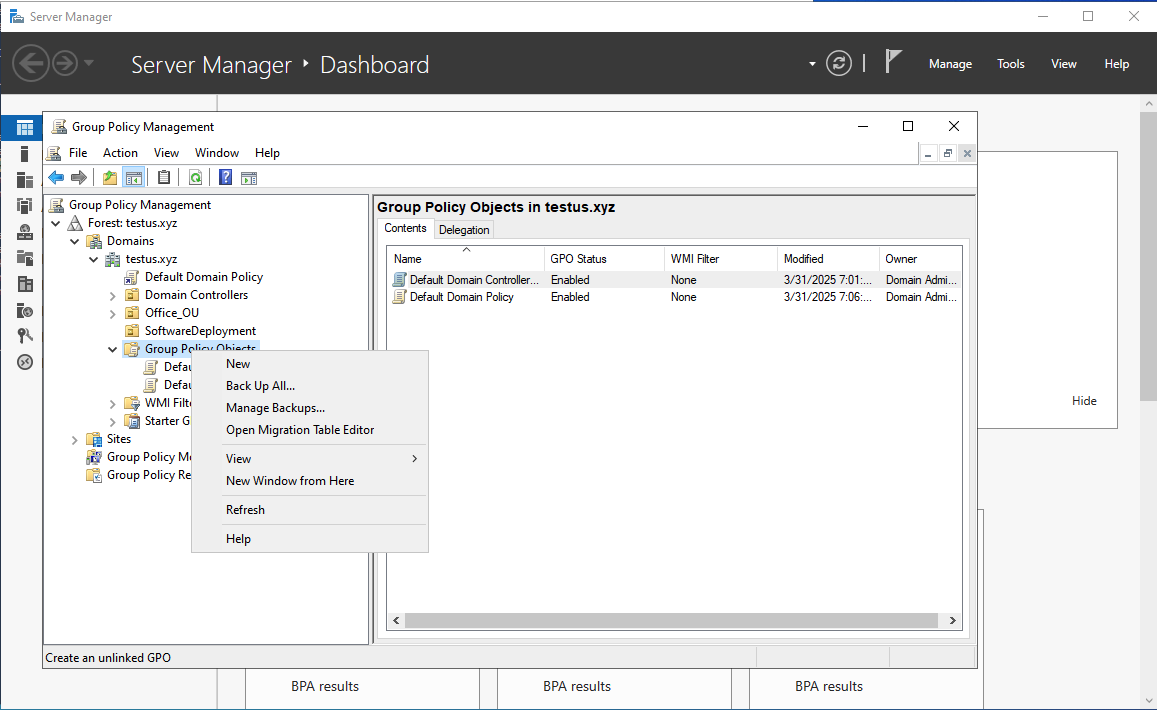
- Create a new GPO by right-clicking on the
Group Policy Objectsfolder under your domain and selectingNew.
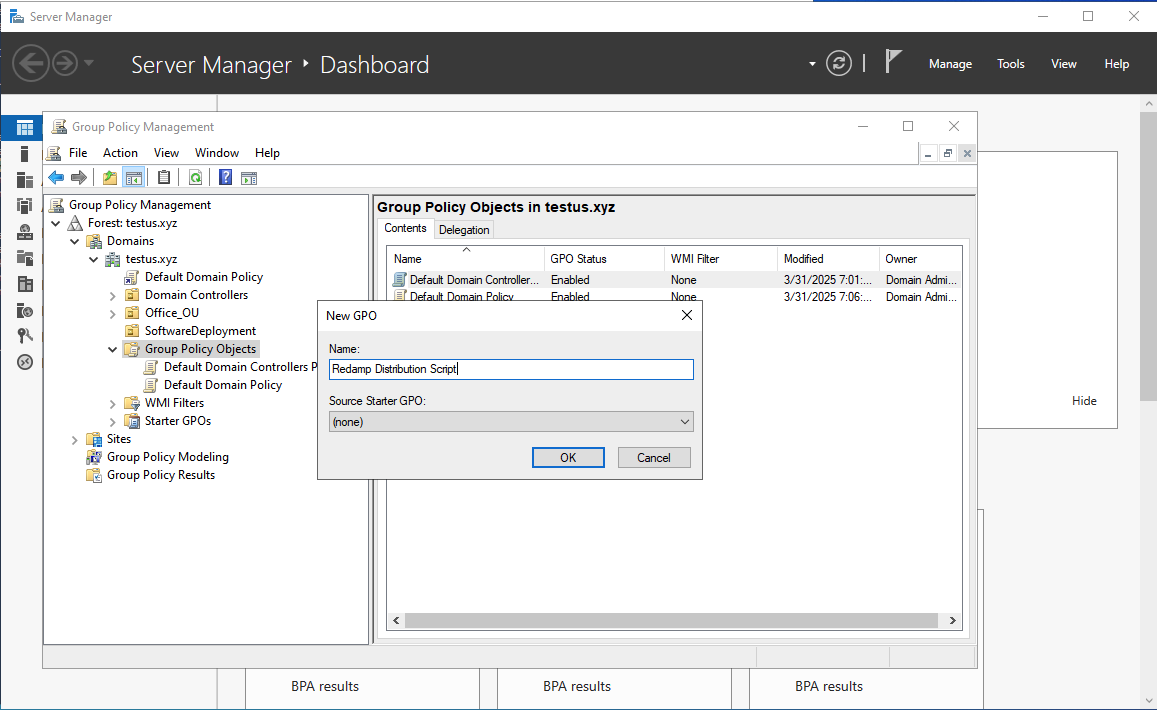
- Enter the GPO name (e.g.,
Redamp Distribution Script) and click theOkbutton.
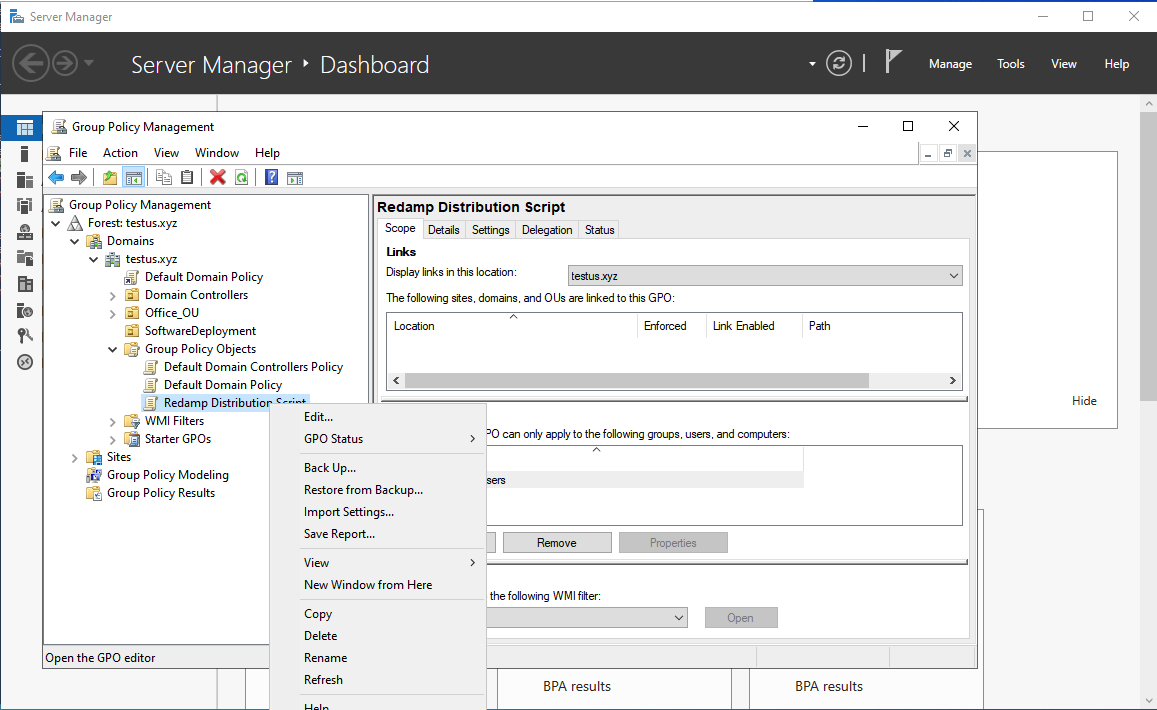
- Right-click the created GPO and select
Edit....
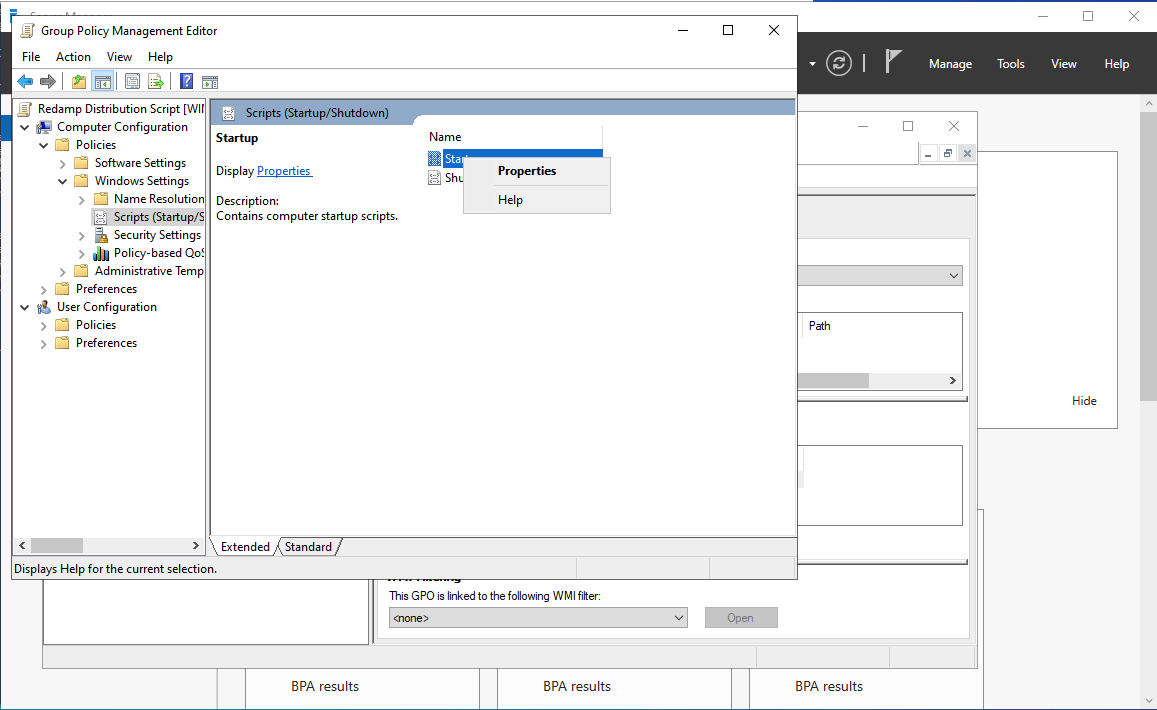
- Navigate to
Computer Configuration->Policies->Windows Settings->Scripts.
-
Then right-click
Startup->Properties. -
Go to the
PowerShell Scriptstab and click theShow Files...button.
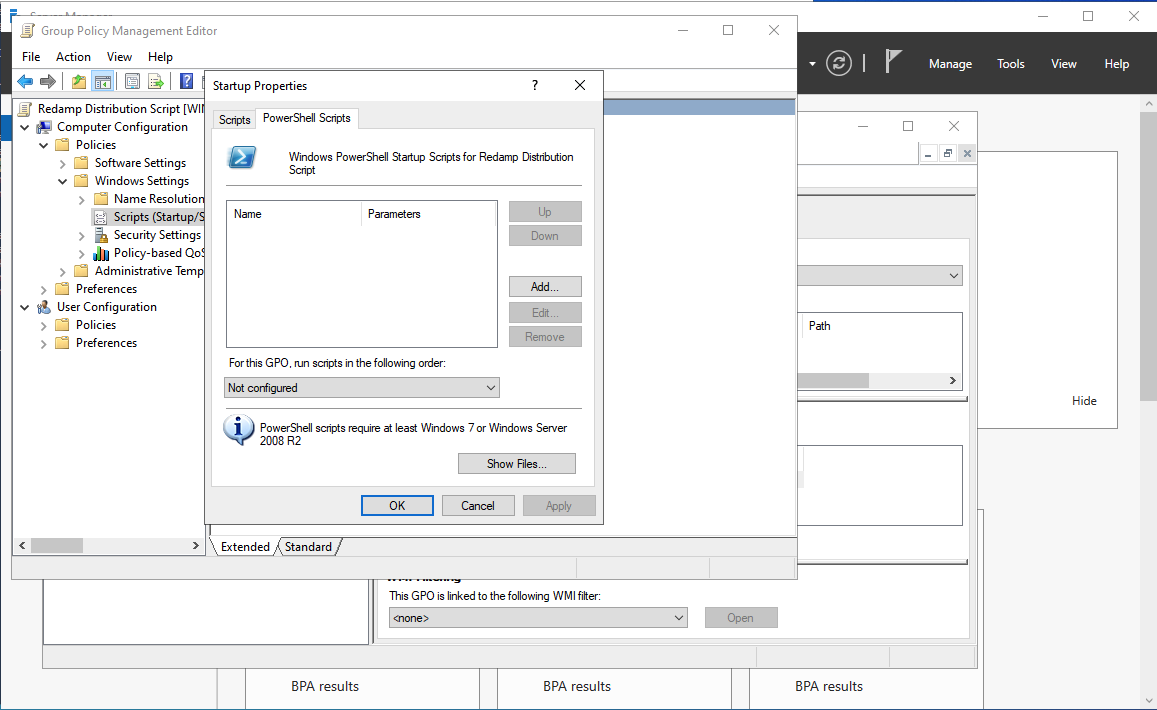
- A shared directory will open; place the RedampDistribution.ps1 script you downloaded from the website.
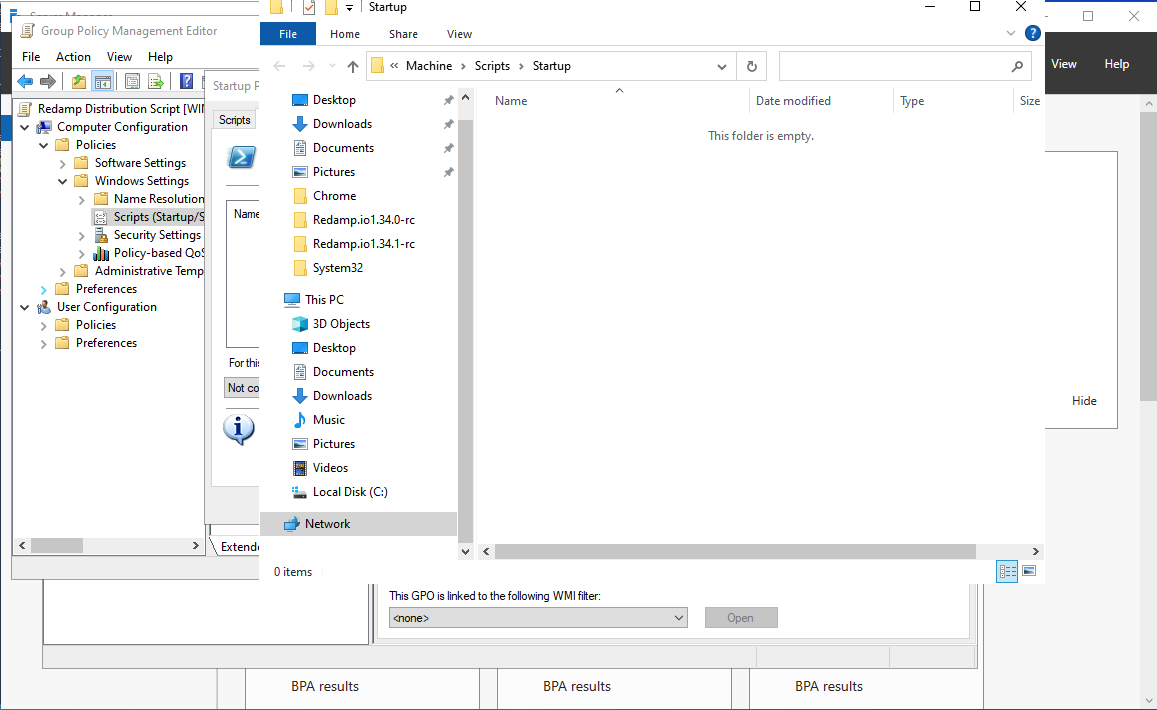
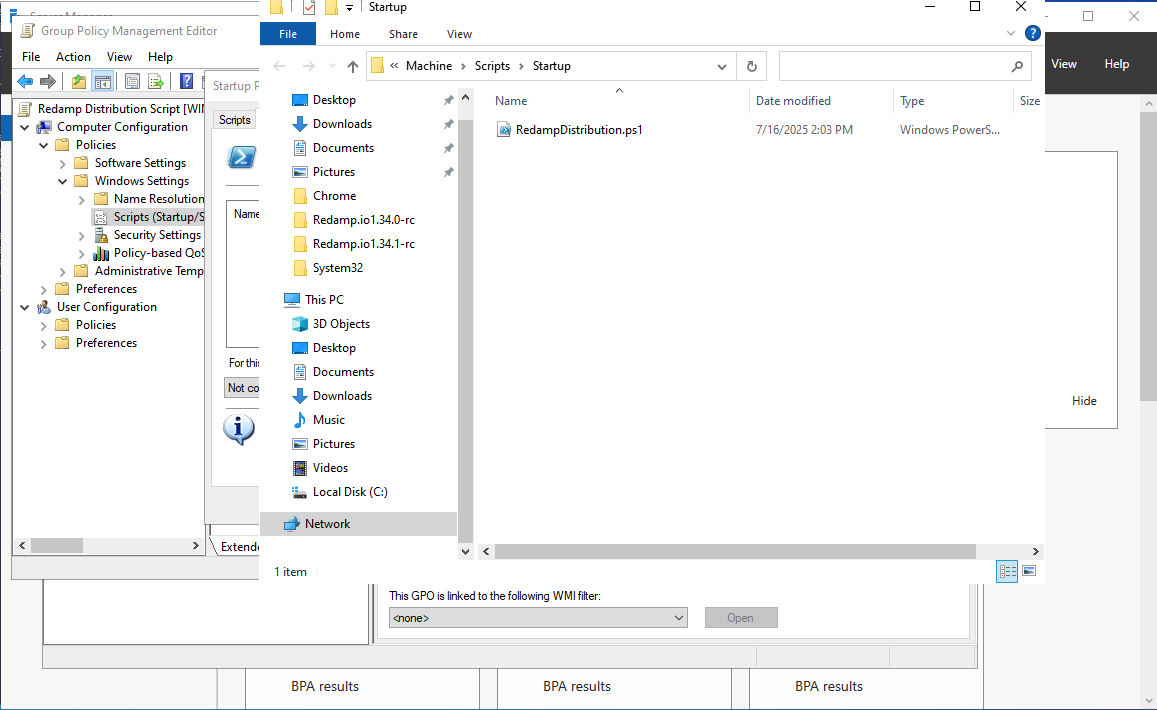
- You can now close the shared directory. Click the
Add...button, then clickBrowse...and select the RedampDistribution.ps1 script you placed in the previous step.
- Add one of the following parameters:
| Parameter | Description | Required | Example |
|---|---|---|---|
| -SecretFile | Path to the token file on the protected share from step 2 (recommended) | Yes, or use -Secret | \\DC01\RedampToken$\token.txt |
| -Secret | The token generated in step 1, entered directly | Yes, or use -SecretFile | Random string |
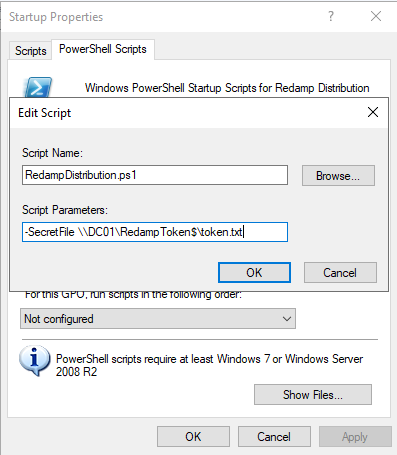
Both options install and sign in Redamp.io the same way. If devices do not sign in with -SecretFile, for example because the file server is not reachable when the devices start, replace it with -Secret and the token.
-
Click the
Okbutton to save changes. -
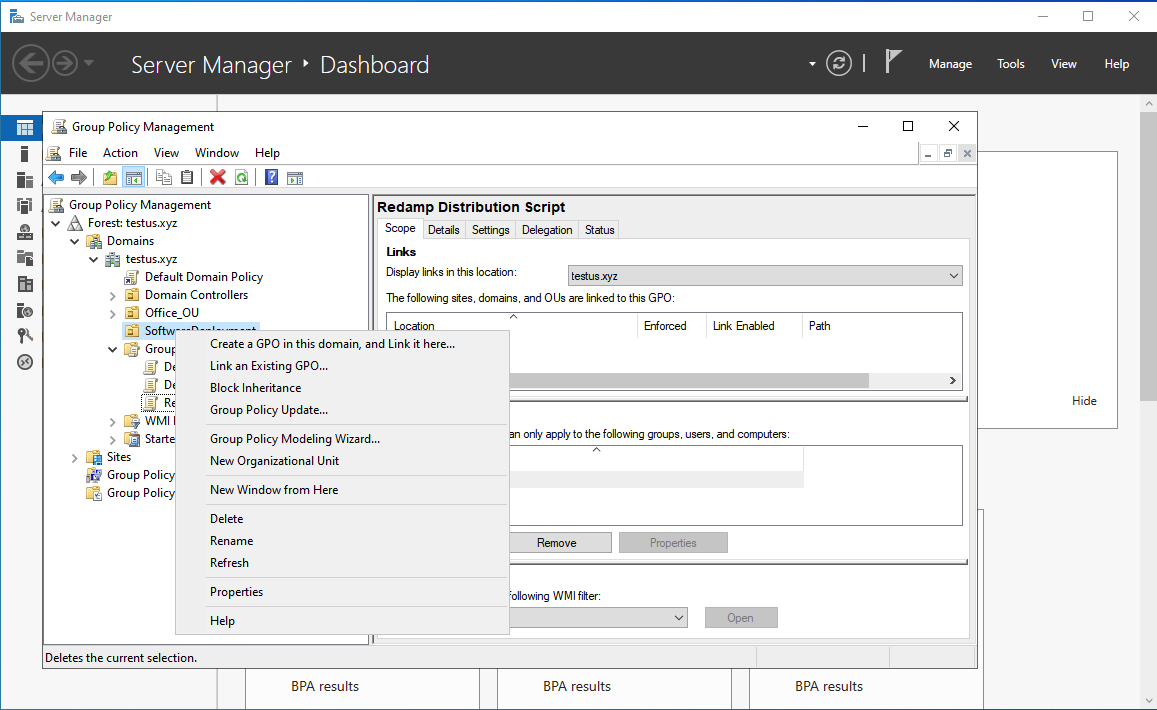
Right-click your organizational unit where you want to distribute Redamp.io and select
Link an existing GPO....
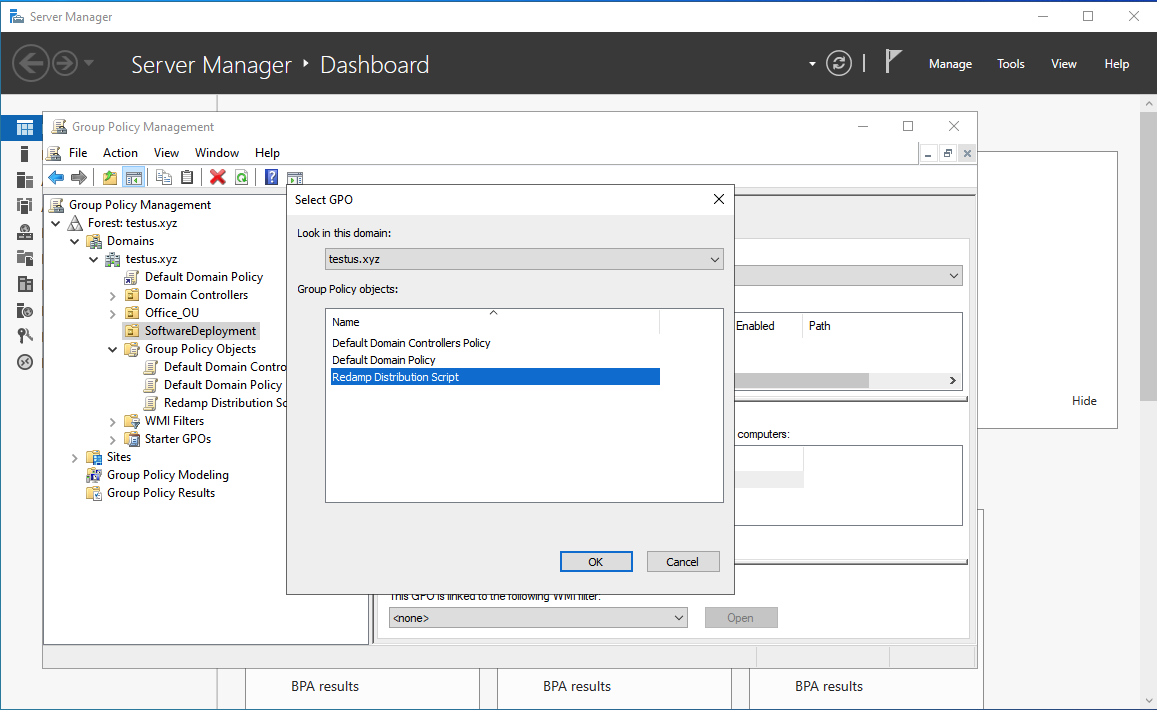
- Select the GPO you created in the previous steps and click the
Okbutton.
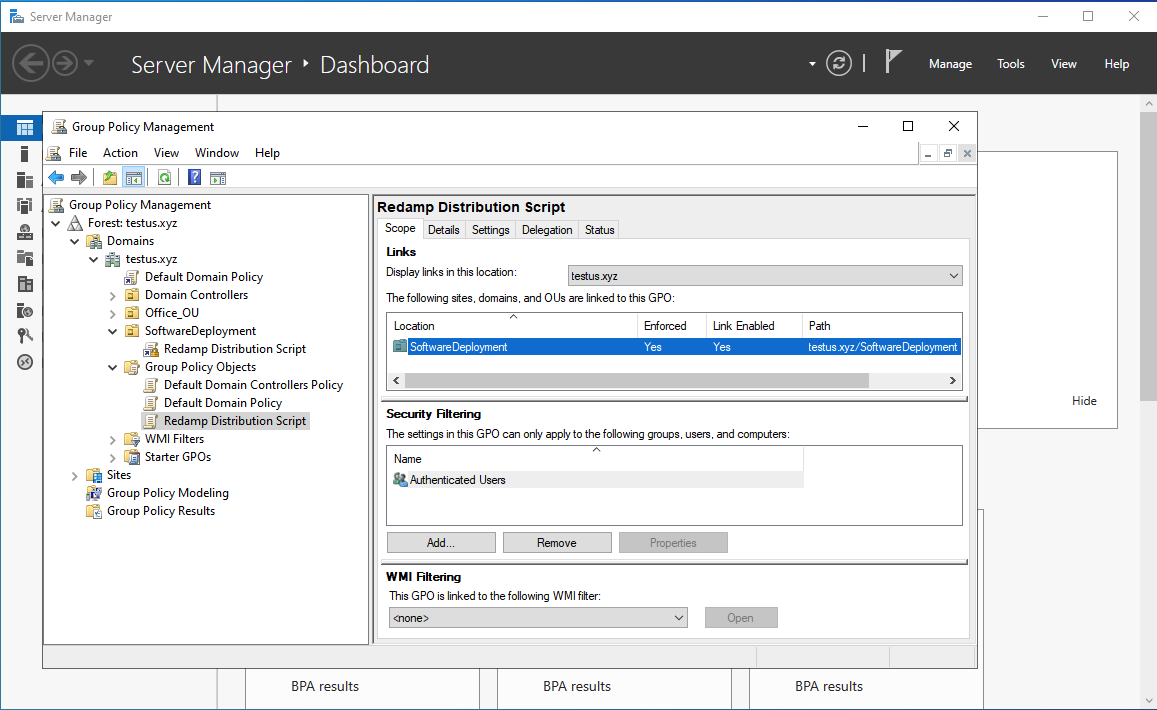
- To enforce the policy, change the
Enforcedcolumn toYes.
- The PowerShell script will install the Redamp.io application after the Windows device restarts. If Windows Fast Startup is enabled,
Shut downdoes not fully restart the device, so useRestart. On devices where Redamp.io is already installed, the script does nothing and the application keeps itself up to date.
Switching an existing deployment to the protected share
-Secret keeps working, so no change is needed. To switch to the recommended setup:
-
Download the current
RedampDistribution.ps1in Redamp.io (Devices->Import via GPO->Download script) and replace the script in your GPO. -
Create the protected share from step 2.
-
In the GPO script parameters, replace
-Secret <token>with-SecretFile \\DC01\RedampToken$\token.txt, using the path of your share.