Dangerous Online Challenges Are Targeting Children Again
Dangerous online challenges are reappearing, targeting children and teenagers. The Blue Whale challenge has resurfaced in a new form after several years, now called Red Dolphin. At first, it may look innocent. However, these challenges often serve for manipulation. Simple tasks gradually escalate and may even lead to self-harm. Every parent should ask: Do you know what your children are doing online?
TL;DR: Talk to Your Children About Their Online Activities
Dangerous challenges spread mainly through social media and chat platforms. Tasks often start innocently but gradually escalate, exposing children to intimidation, manipulation, or blackmail. The best protection is open communication and digital literacy.

When a Game Turns Into Manipulation
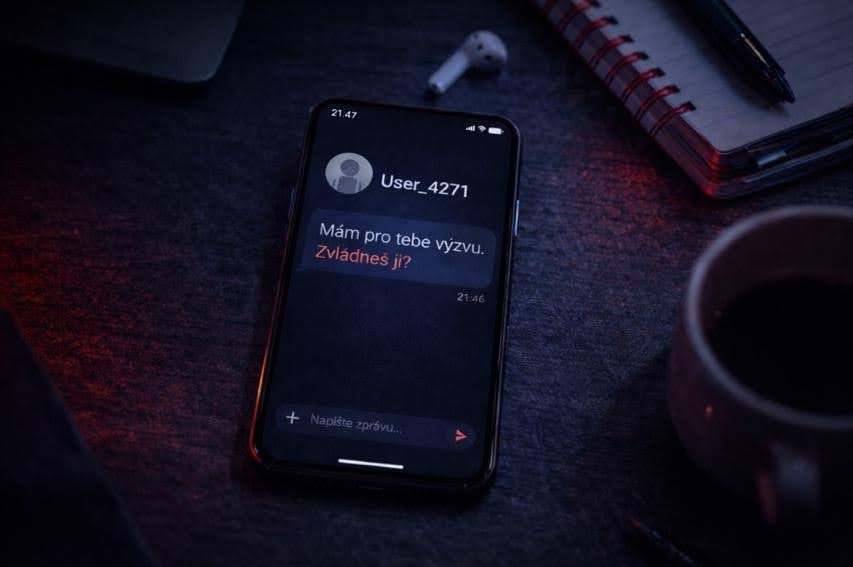
These challenges spread mainly through platforms such as TikTok and Instagram and usually start harmlessly. A child or teenager may be contacted by an anonymous account inviting them to join a secret game. The communication is often designed to appear mysterious and appealing, suggesting that the game is meant only for a select group.
The first tasks typically seem harmless. They might involve watching a specific video or drawing a dolphin on hand. Their purpose is to build trust and draw the participant deeper into the game. Gradually the tasks become more demanding and potentially dangerous. At the same time, the organizer insists that the game must remain secret, pushing the participant to hide it from parents and friends.
Organizers rely heavily on psychological manipulation. They play on curiosity, a sense of exclusivity, and the fear of not completing the game. In some cases, they may also try to obtain personal information, photos, or videos that can later be used for intimidation or blackmail.
According to CNN Prima News, a minor girl ended up in the emergency department after completing tasks linked to the “Red Dolphin” challenge. Among the tasks she was asked to complete was inhaling perfume for at least ten minutes and recording a video as proof. Another task involved carving various letters and numbers into her skin.
She was later instructed to drink liquid from an electronic cigarette refill. When she refused to complete this task, the so-called “curator” began threatening her. According to available information, she received a photo of her family along with a threat warning that the attacker knew where she lived and could harm her family.
Peers Acting as Curators
These challenges often spread through anonymous social media profiles that present themselves as the “curators” of the game. Although people sometimes imagine organized groups behind them, the reality is often much simpler. Experts from the E-Safety project at Palacký University in Olomouc point out that many of these profiles are actually run by children or teenagers themselves. Their intention is usually not to harm anyone but rather to attract attention and gain followers on social media.
The Best Protection? Prevention
The ability to intervene in such situations is limited. Organizations focused on online safety cannot directly delete accounts or block content, and the police can usually act only when a criminal offense has occurred.For this reason, experts emphasize that prevention and awareness are the most effective forms of protection.
- Educate yourself about digital threats and online trends.
- Take an interest in the apps and platforms your children use.
- Talk about specific online risks rather than simply banning certain trends. For example, telling a child “don’t play the Red Dolphin challenge” may only spark curiosity.
- Build trust so children feel safe sharing anything that makes them uncomfortable online.
- Pay attention to changes in their behavior, mood, or activities.
Your Child Joined a Challenge. What Now?
Even with prevention, a child may still encounter such a challenge. In that case, it is important to know how to respond.
- Stay calm. Punishment may only discourage the child from speaking up next time.
- Save messages or take screenshots as evidence.
- Block and report the account spreading the challenge directly on the platform.
- If there are threats, blackmail, or any signs of self-harm, contact the police immediately.
Final Recommendations for Your Safety
- Stay informed! Read our blog and follow alerts in the app about the latest threats we’re monitoring for you.
- Our app Redamp.io includes a Safe Surfing feature that effectively handles protection against the latest threats such as phishing or malware.