AI Instagram Feature Pulled Over Privacy
Imagine someone entering your Instagram username and artificial intelligence generating entirely new images based on your public photos. This was briefly possible thanks to a new AI feature introduced by Meta. However, after facing strong criticism over privacy concerns, the company withdrew the feature.
Summary
Publicly shared photos can be used in ways you may never have expected when you posted them.
- AI generated new images based on public Instagram profiles.
- Many users were unaware that the feature had been introduced.
- Meta withdrew the feature following criticism over privacy concerns.
What happened?
Meta introduced a feature called Muse Image, which allowed AI to generate images based on publicly available Instagram photos. Users simply had to enter the username of a public profile, and the AI would create new content inspired by that person's posts.
Although the feature did not copy the original photos, many people were surprised that the images they had shared on Instagram could be used in this way.
Why did it raise concerns?
The main concern was not the artificial intelligence itself, but the way Meta used publicly available photos. The feature was available for all public profiles without users having to enable it themselves. As a result, many people were unaware that their publicly shared photos could be used in this way. Following widespread criticism, Meta announced that it was withdrawing the feature.
Privacy Starts with Your Account Settings
Although the feature has been removed, the case highlighted that publicly shared content can be used in ways users may not have anticipated. If you use social media, it is recommended to:
- review your privacy settings
- consider whether you really need a public profile
- only share photos publicly if you are comfortable with a wider audience seeing them than you originally intended
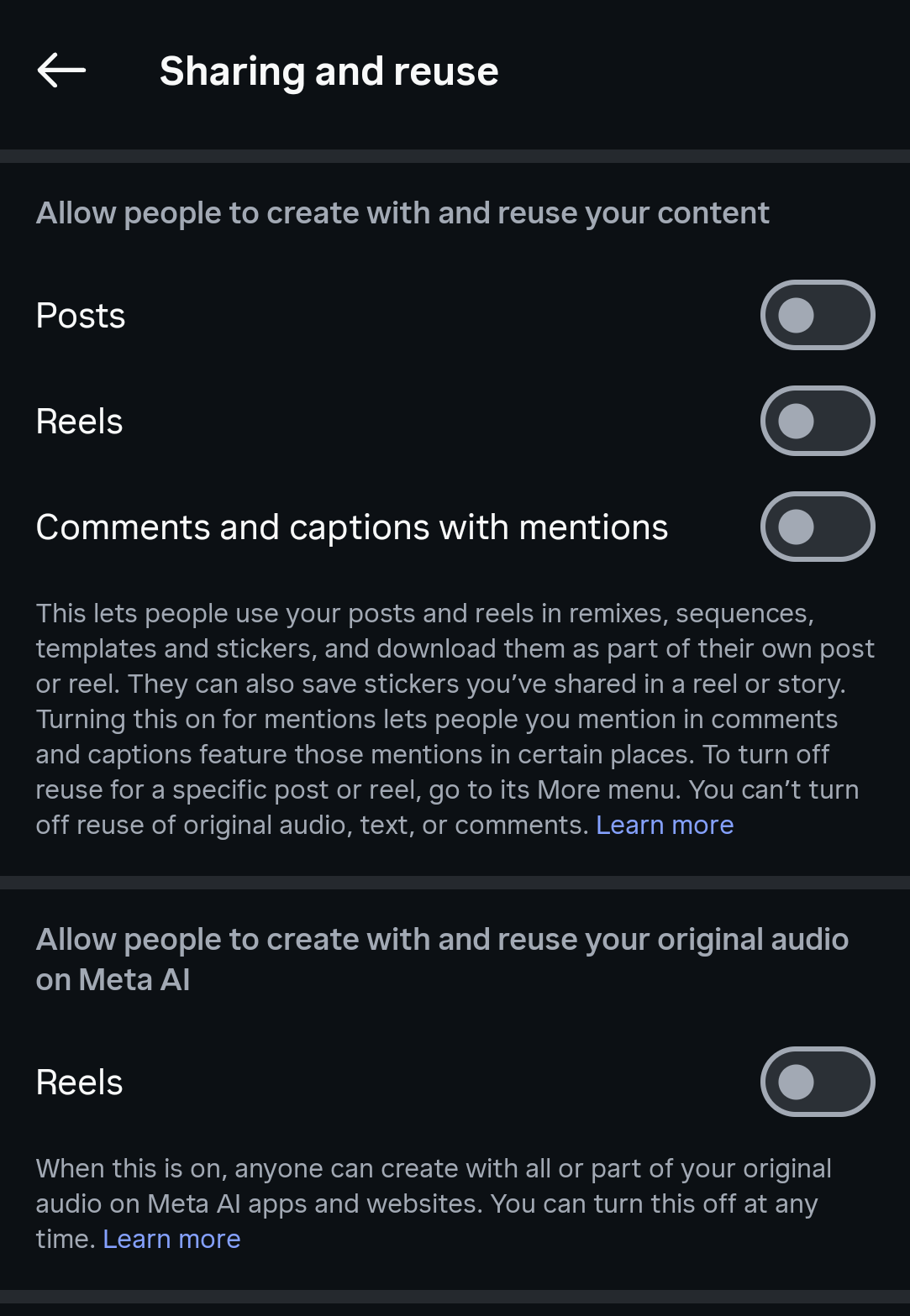
You can check your sharing settings:
- Settings -> Sharing and Reuse
The rapid development of artificial intelligence brings new opportunities, but it also raises important questions about privacy. On our blog , we regularly share information about the latest cybersecurity threats and practical tips to help you better protect your privacy and personal data online.