Be Careful What You Teach AI
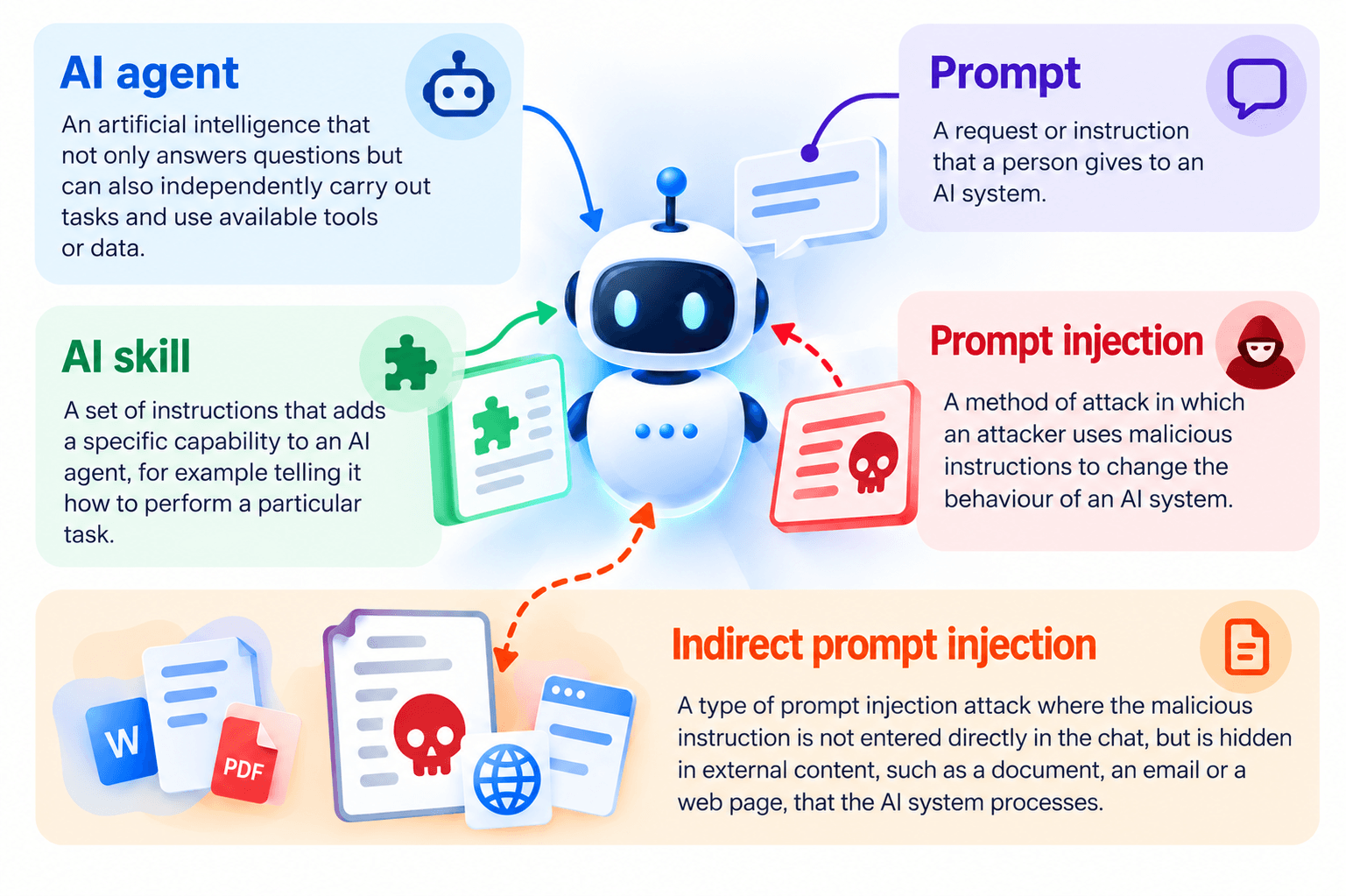
Want AI to help you with specific tasks? Ready-made instructions are available online and can define how it works with documents, emails, or company data. But they may contain malicious commands that make AI take unwanted actions or put the data it can access at risk.
Summary
Ready-made instructions can make working with AI much easier. But if you use instructions from an external source without checking them first, you may not know what they are actually telling AI to do.
- Instructions can adapt AI to specific tasks.
- Ready-made AI skills can be found and downloaded online.
- They may contain hidden malicious instructions and put company data at risk.
- Third-party instructions should always be checked before use.

What Is Hidden in the Instructions?
Sets of instructions that adapt AI to a particular task are often called skills. They can tell AI how to analyze documents, prepare reports, or work with information.
Instead of creating your own skill, you can use a ready-made one. Specializations created by other people are available online and can be added to your AI. It is quick and convenient, but it also means adopting instructions written by someone else.
And those instructions may not do only what you expect. Malicious commands can be hidden among legitimate ones and may try to access data the AI is working with or make it perform an unwanted action.
A malicious instruction alone does not mean that an attacker will automatically gain access to sensitive data. What matters most is what the AI can access and what actions it is allowed to perform.
Malicious Instructions Can Come From Elsewhere
Malicious instructions do not have to be hidden only in a downloaded skill. They can also be part of the content you ask AI to process.
Imagine someone sends you a document and you ask AI to summarize it. The document may contain an instruction aimed at the AI, telling it, for example, to ignore your original request and follow different instructions.
You may not notice such an instruction at all. But AI can read it while processing the document and may start following it. This is known as indirect prompt injection, a type of attack in which a malicious instruction reaches AI indirectly through the content it processes.
More Access Means More Risk
The more AI can do, the more important it is to know which instructions it follows. There is a difference between AI that only answers questions and one that has access to internal documents, emails, or company data. A malicious instruction may try to exploit this access.
You can reduce the risk with a few simple steps:
- Use skills from trusted sources and review their instructions before using them.
- Check which data and tools AI can access.
- Do not give AI more permissions than it actually needs.
Ready-made skills can make working with AI much easier. But before using one, make sure you know what instructions you are actually giving your AI. On the Redamp blog , we cover emerging AI-related threats and explain how to protect yourself against them.