Football World Cup Attracts Cybercriminals
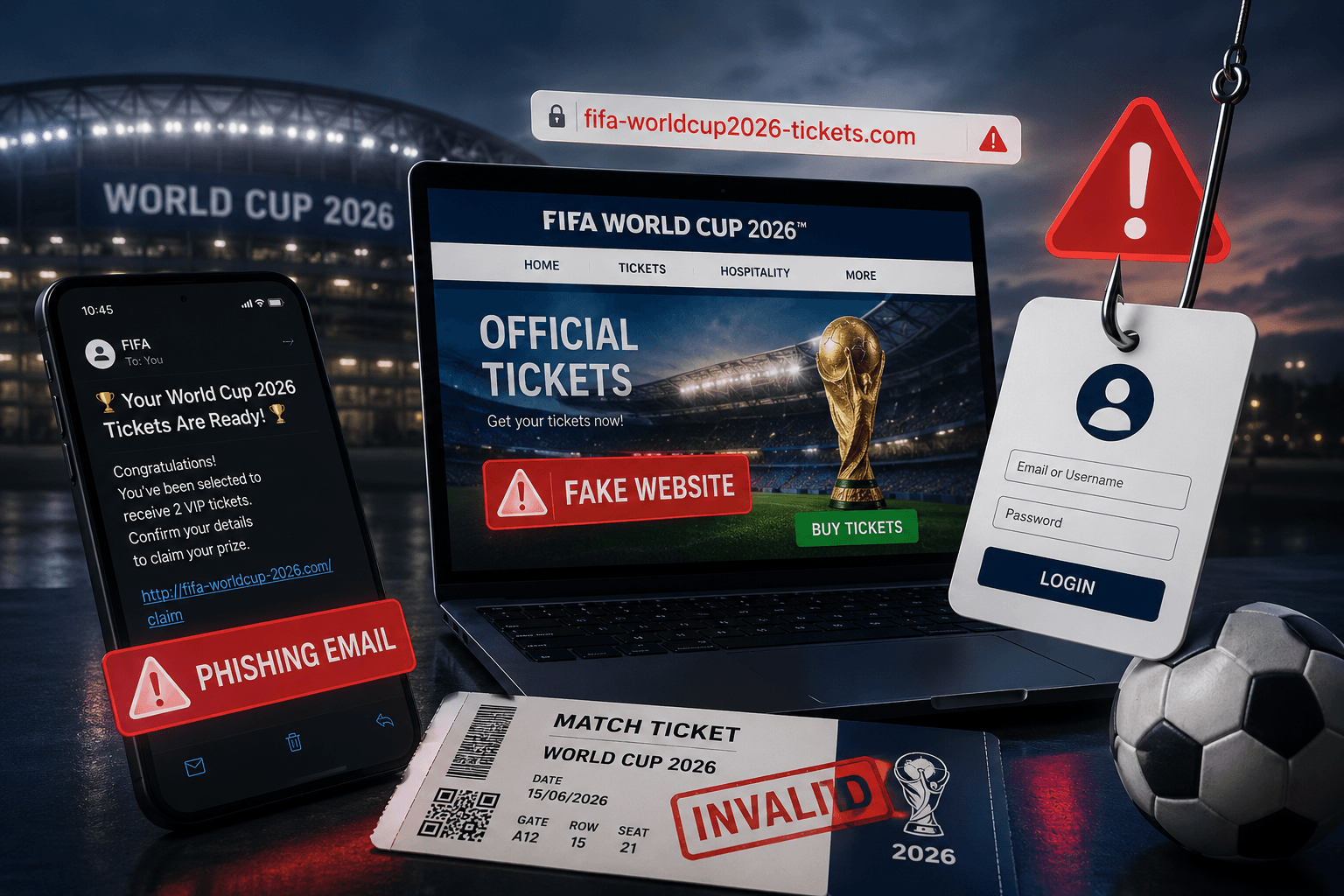
The 2026 FIFA World Cup is attracting not only millions of football fans but also cybercriminals. They are taking advantage of fake websites, phishing emails, and fraudulent social media posts to steal money, login credentials, and payment information from unsuspecting fans.
Summary
Cybercriminals are exploiting the popularity of the FIFA World Cup through online scams.
- fake websites impersonating FIFA or ticket vendors are appearing
- attackers are sending phishing emails containing links to fraudulent websites
- fake websites are offering live match streaming services
- the goal is to steal login credentials or payment information
Football as a Bait for Cybercriminals
Major sporting events provide an ideal opportunity for cybercriminals. They know that people searching for tickets or hotels often make impulsive decisions driven by excitement. Their scams are designed to exploit exactly that.
Victims are commonly told that:
- only a few tickets remain
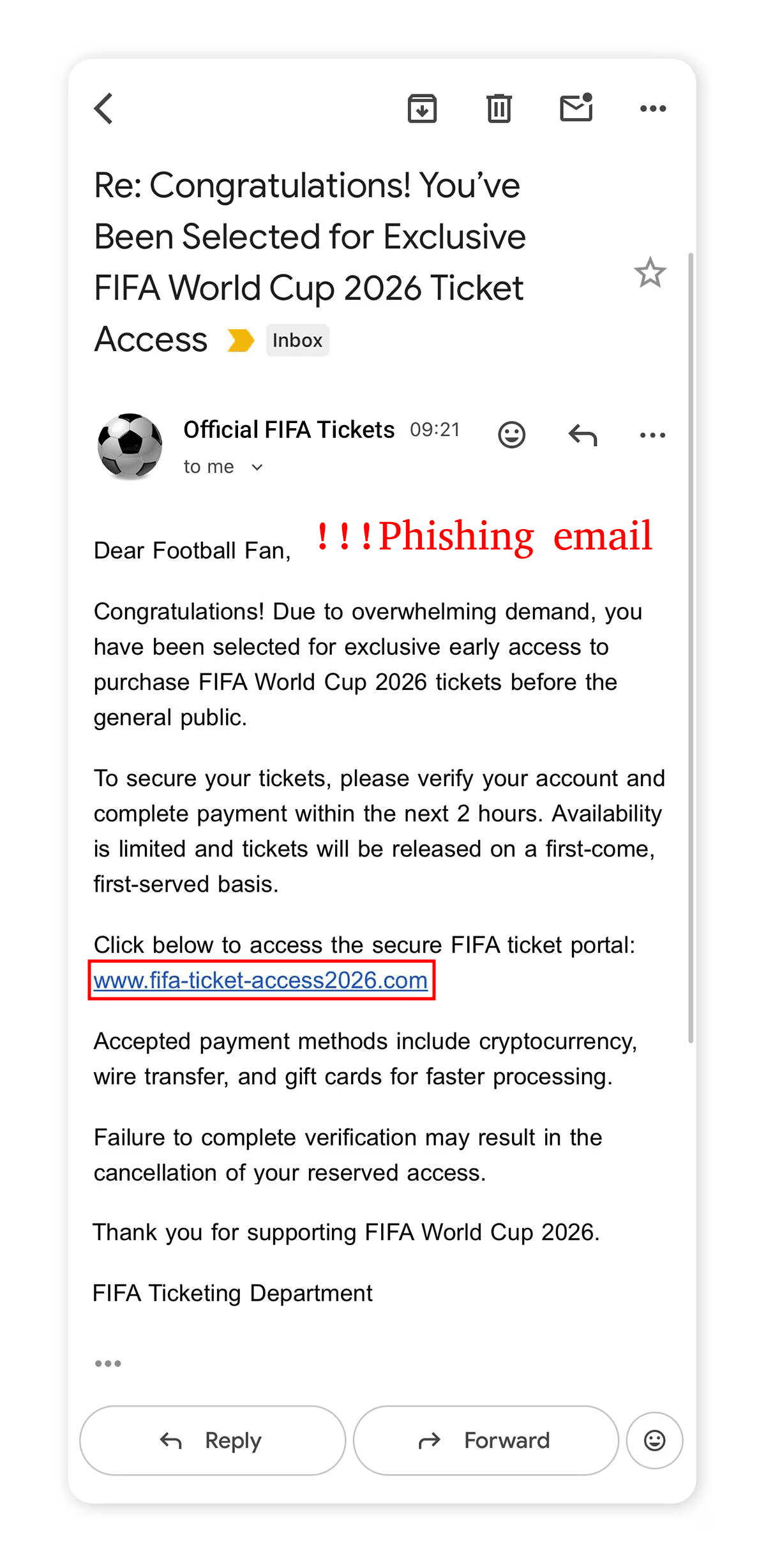
- the offer expires within minutes
- tickets are available only through this link
- the reservation must be confirmed immediately
In reality, the link leads to a fraudulent website.
What Do These Scams Look Like?
Cybercriminals frequently create fake websites that imitate the official FIFA website, legitimate ticket vendors, or other World Cup partners. Security researchers have already identified hundreds of newly registered domains related to the tournament. These websites are used for phishing, malware distribution, and other online scams. The most common scenarios include:
Fake Tickets
One of the most common scams involves selling fake or invalid match tickets. Attackers create websites that closely resemble legitimate ticket vendors. After payment, the customer either receives no ticket at all or is sent an invalid QR code that cannot be used to enter the stadium.

Phishing Emails
Attackers send emails pretending to come from FIFA, tournament organizers, ticket providers, or travel companies. The links in these messages redirect users to fake websites designed to steal login credentials or payment card information.
Fake Streaming Services
Cybercriminals also target fans who want to watch matches online. They create websites advertising free or low-cost live streams. Visitors may then be asked to enter their payment card details, sign in with an online account, or download a malicious file.
How Can You Stay Safe?
While it is impossible to eliminate the risk completely, you can significantly reduce your chances of becoming a victim.
We recommend:
- purchasing tickets only through official websites
- checking the website URL before entering personal or payment information
- avoiding links in suspicious emails, text messages, or social media posts
- being cautious of offers promising exclusive tickets or unusually low prices
Cybercriminals rely primarily on people's inattention and a sense of urgency. Staying vigilant remains one of the most effective ways to avoid these scams. Follow our blog for the latest updates on cybersecurity threats and practical tips to help you stay protected.
We Can Help Protect You
Our app Redamp.io includes a Safe Surfing feature that effectively filters out websites of fake sellers and fraudulent purchase portals.