Cyber-Safe Summer Vacation
- Published
Planning a summer vacation? Besides your travel documents and sunscreen, don't forget about your cybersecurity. Booking accommodation, using public Wi-Fi, or communicating with hotels can all create opportunities for cybercriminals.
Summary
Before and during your trip, it's worth paying attention to your cybersecurity.
- Update your phone, laptop, and apps before you leave.
- Use a VPN when handling sensitive data on public Wi-Fi networks.
- Enable two-factor authentication (2FA).
- Watch out for messages requesting payment card verification or additional booking payments.
- If in doubt, contact the hotel only through official channels.

Public Wi-Fi Isn't Always Safe
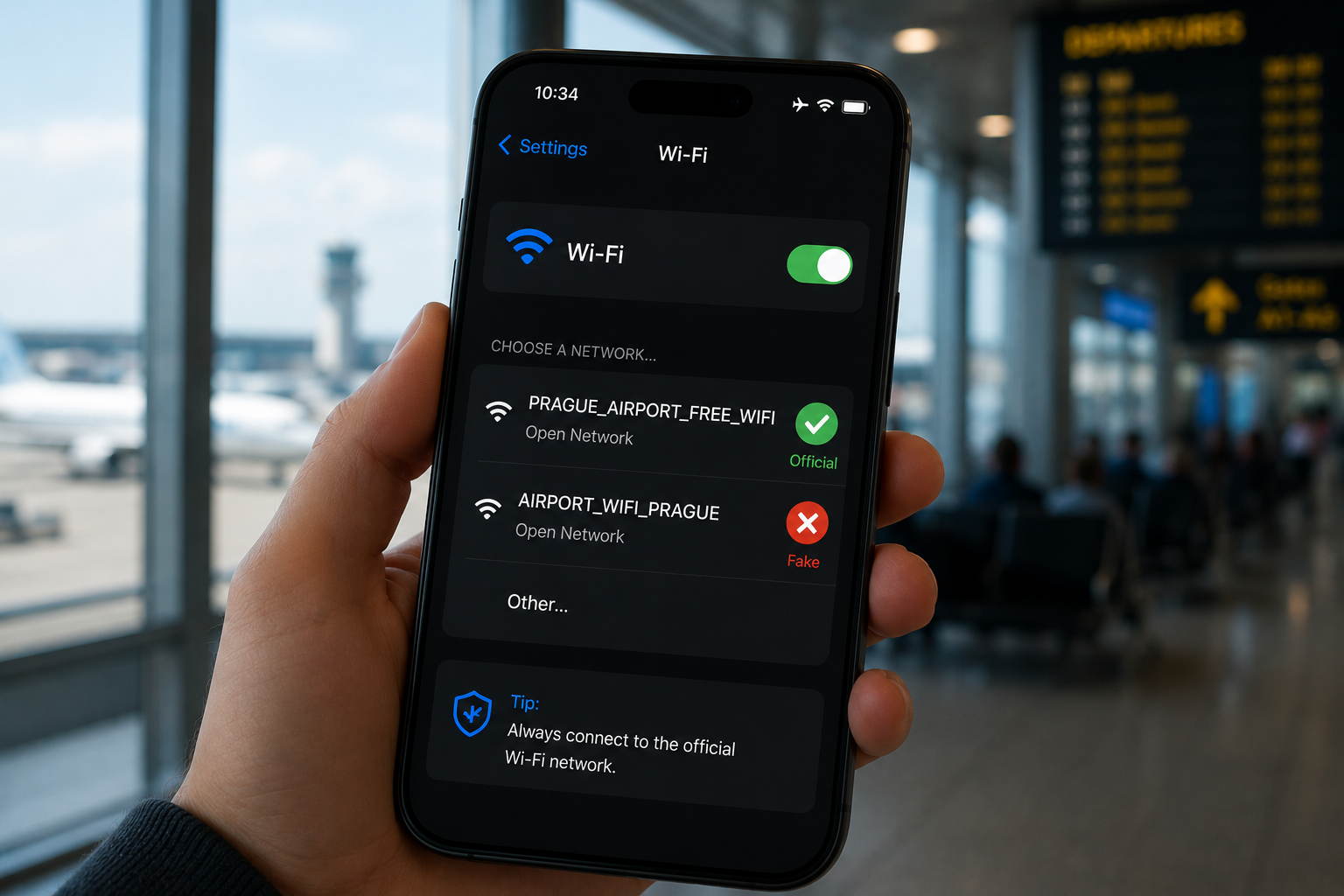
Public Wi-Fi is commonly available at airports, cafés, and hotels. However, not every network is trustworthy. Attackers can create a network with a name similar to the hotel's or airport's official Wi-Fi and redirect users to fraudulent websites or attempt to steal their login credentials.
We recommend:
- avoid logging into online banking while connected to public Wi-Fi
- use a VPN when working with sensitive information
- disable automatic connections to public Wi-Fi networks
Mobile data is generally more secure than connecting to an unknown public Wi-Fi network.
Beware of Fake Hotel Messages
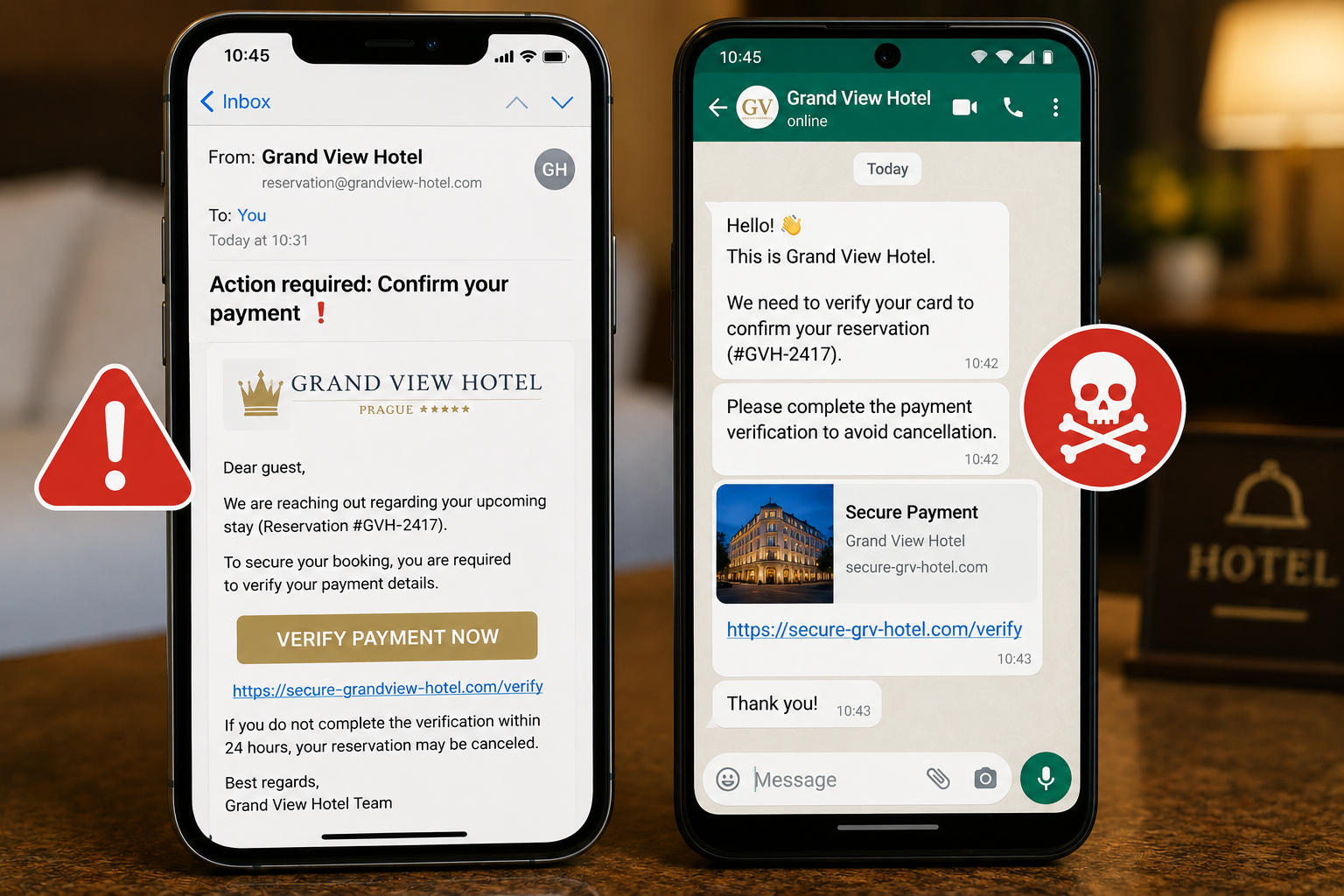
Cybercriminals are increasingly targeting booking platforms such as Booking.com. They impersonate hotels or accommodation providers and contact guests via email or WhatsApp, requesting:
- payment for the remaining balance
- payment card verification
- payment of a supposed security fee
These fraudulent messages often contain real booking details, such as the guest's name, hotel name, or travel dates, making them appear highly convincing. However, the included link usually leads to a fake payment page designed to steal payment card information.
What makes this scam particularly dangerous is that many hotels genuinely communicate with their guests through WhatsApp. Therefore, the messaging platform itself is not a sign of fraud. Instead, pay attention to requests for payment details or links leading to external websites.
If you're unsure:
- open your reservation directly in the official app or on the website
- contact the hotel using the contact details listed on its official website
- do not open links from messages until you have verified that they are legitimate
Secure Your Devices Before You Travel
Spending just a few minutes preparing your devices before your trip can prevent unnecessary problems. System updates often fix security vulnerabilities that attackers may exploit.
Before you leave, remember to:
- install all available updates
- enable two-factor authentication (2FA) for your important accounts
- back up your photos and important documents
- activate your device's Find My Device feature
If your phone is lost or stolen, these measures will give you a much better chance of protecting your data.
Stay Vigilant After You Return
After returning from your vacation, it's a good idea to review your bank account and check for any unauthorized transactions. If you connected to public Wi-Fi networks or used shared devices during your trip, it's also recommended to change the passwords for your important accounts.
Cybercriminals rely mainly on people's inattention and haste. Staying vigilant is therefore one of the most effective ways to avoid these scams. On our blog, we regularly share information about the latest cyber threats and practical tips to help you stay safe.
We Can Help Protect You
Our app Redamp.io includes a Safe Surfing feature that effectively filters out websites of fake sellers and fraudulent purchase portals.