“Mom, Send Money.” Scam Targets Parents
- Published
- Threat for
A message arrives from an unknown number. Someone claiming to be your son or daughter says their phone is broken and they urgently need you to send money. In reality, it could be a scammer relying on parents’ trust and hoping they will act quickly.
Summary
Scammers impersonate children and try to convince their victims to send money quickly.
- the message usually comes from a new phone number
- the scammer claims their phone is broken or not working
- after a short conversation, they ask you to pay an invoice or transfer money
- they create a sense of urgency to give you less time to verify the situation
- before sending any money, contact your relative using their original phone number
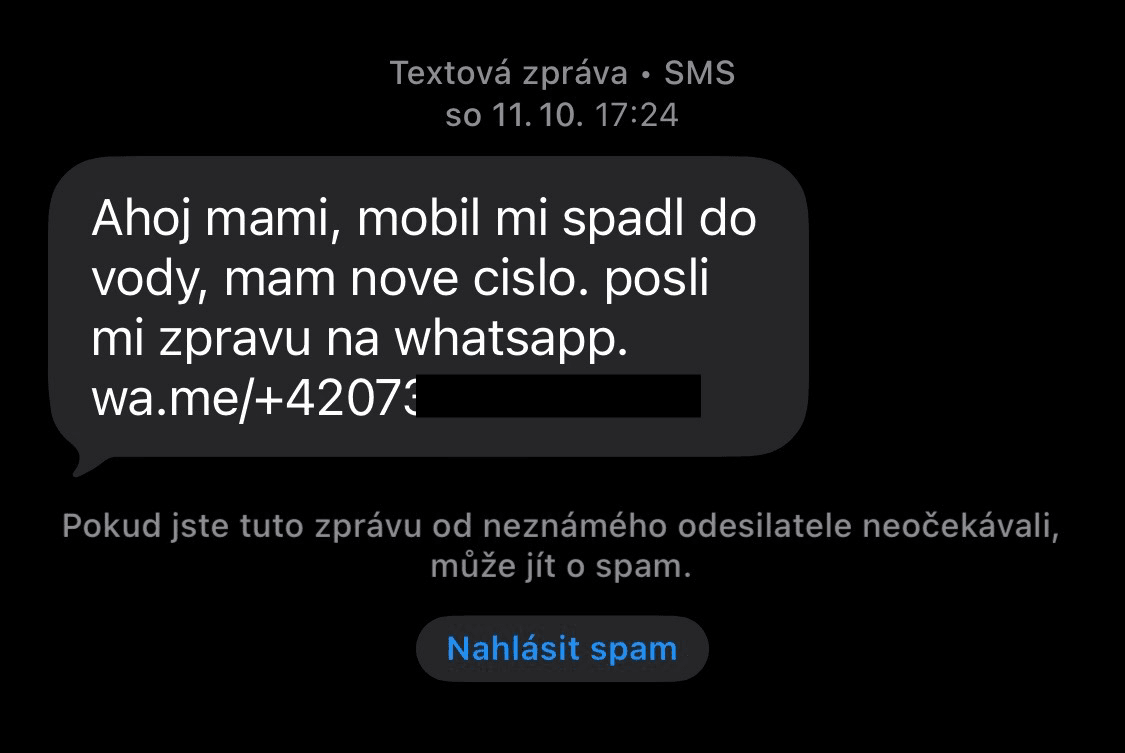
It Starts with an Innocent Message
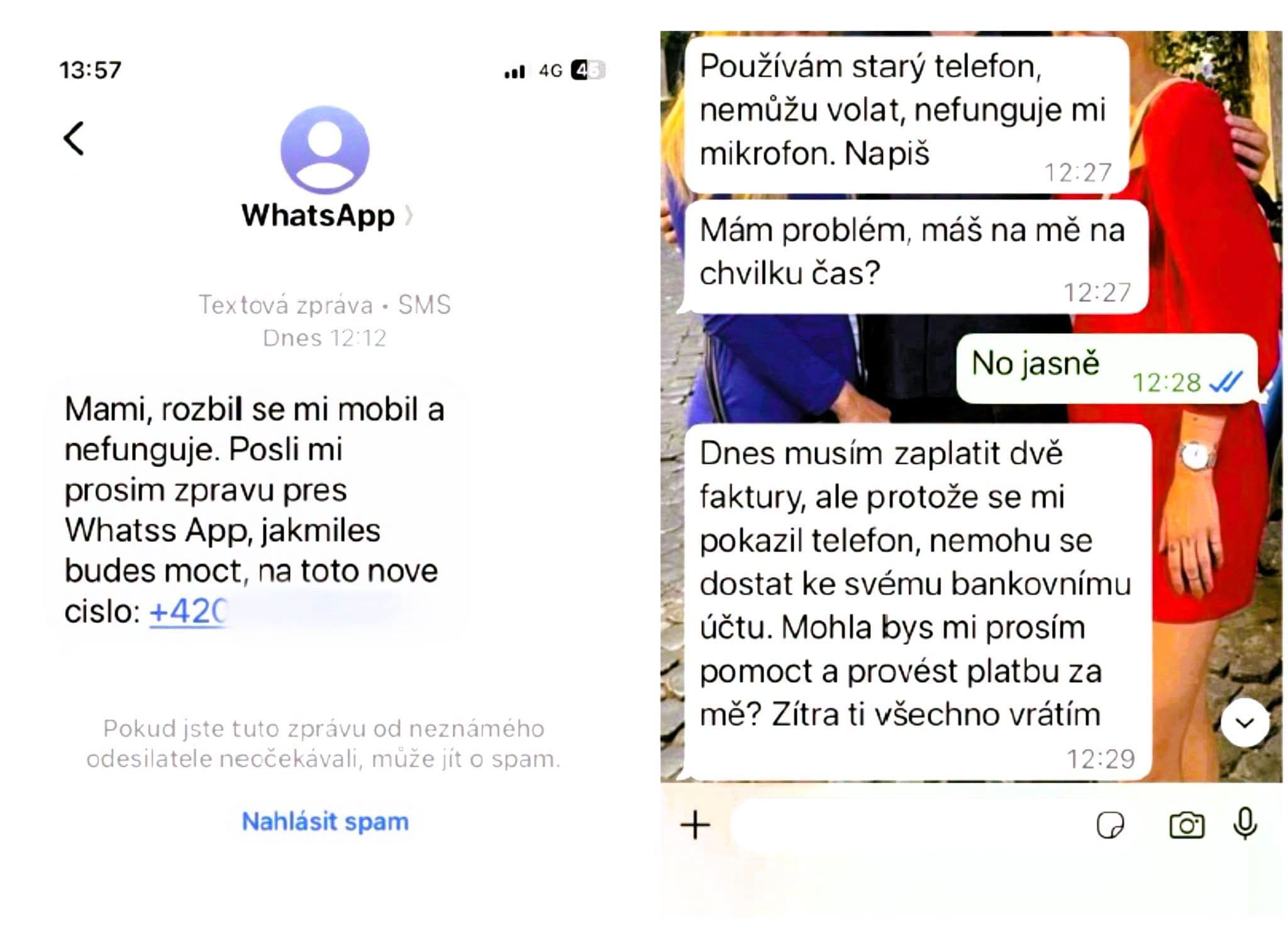
The scenario is often similar. A scammer contacts you from an unknown number and pretends to be your son or daughter. They may claim that their phone is broken, has been damaged by water, or that they have a new number. The conversation may then move to WhatsApp. The scammer may initially chat about everyday things to appear convincing. Only then do they ask for money – for example, claiming they cannot access their online banking and urgently need to pay an invoice.
Losses Reach Hundreds of Thousands
This is not just a hypothetical scenario. In August 2026, police in the Moravian-Silesian Region reported more than ten similar cases in which scammers stole a total of more than CZK 1 million from victims. Similar cases have also appeared in other parts of the Czech Republic. Victims sent tens of thousands of Czech crowns believing they were helping their own child. After the first payment, scammers often followed up with another request to pay an additional supposed invoice.
A Phone Call Can Expose the Scam
If a relative contacts you from an unknown number and asks for money, do not rush to make the payment. Be particularly cautious if they create a sense of urgency or ask you to send money based solely on an SMS or WhatsApp message. First, verify who you are actually communicating with. The easiest way is to:
- call your child or relative using the phone number you already have saved
- ask a question that only the real family member would know
The Scam Relies on Emotions
Scammers do not need to crack a password or hack a bank account. Instead, they exploit trust, concern for loved ones, and the instinct to help them quickly. This is why these messages can be convincing even to people who are normally cautious online.
On the Redamp blog , we regularly share information about current cybersecurity threats and practical tips on how to recognize scam messages before it is too late.